
St. Lawrence
The market brings daytime bustle, while the streets towards the Esplanade reveal a lived-in residential district. Come for food and architecture, then leave time to walk beyond the market building.
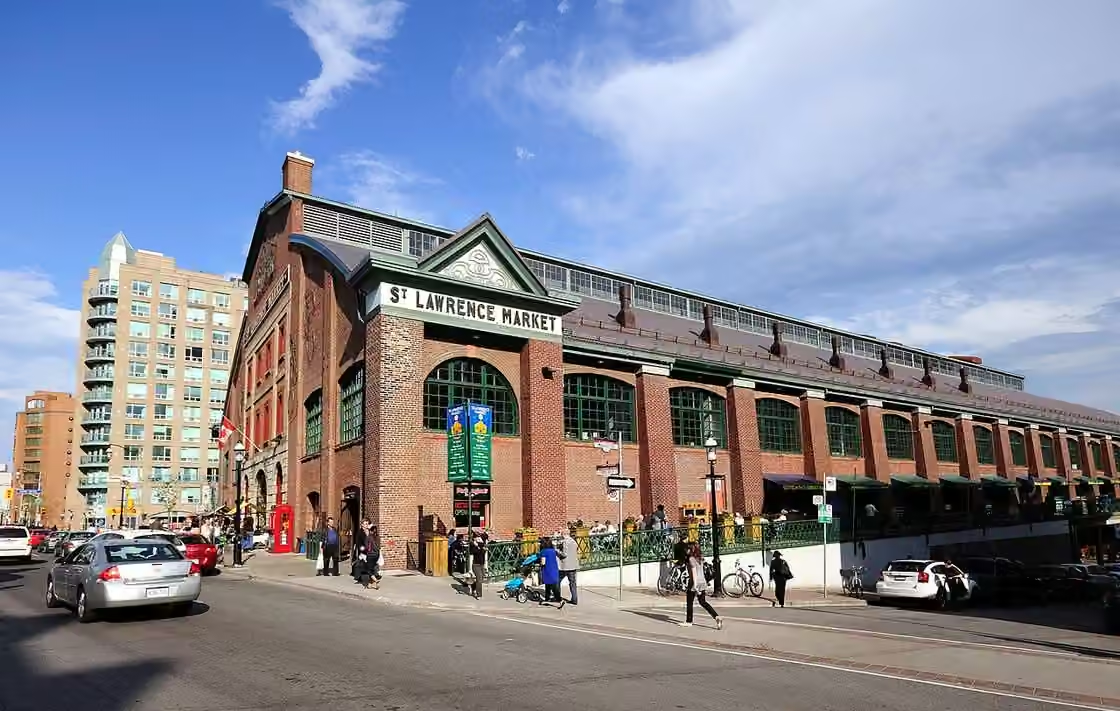
Spending time here
The market is an obvious destination, but a walk along the Esplanade reveals the everyday spaces of the later neighbourhood. Housing and local facilities give the area a purpose beyond tourism and office work. For a date, this is a strong daytime or early-evening choice: start with a market visit or exhibition and continue on foot through the old core. Check the actual opening hours of the places you want to enter, since the district’s residential streets remain accessible after particular market or cultural spaces have closed.
The market and the early city
St. Lawrence occupies part of the early urban core of Toronto, including the original Town of York. In 1803, land around Front and Jarvis was set aside as a market block. Buying and selling food developed alongside civic functions, so the district was central to both everyday provisioning and public life. The succession of market buildings records a city repeatedly adapting the same important location.
The South Market incorporates part of Toronto’s nineteenth-century City Hall. Municipal government moved away in 1899, and the building was altered for its expanded market role. Upstairs, the former council chamber is now the Market Gallery. That relationship is easy to miss during a food visit: one of Toronto’s busiest places to buy lunch also contains a room in which the city was governed.
Public buildings and public arguments
The fire of 1849 led to substantial rebuilding around the market. St. Lawrence Hall opened in 1850 and hosted concerts, lectures and meetings. The City’s walking guide also records its role in anti-slavery organising, including the 1851 Convention of Coloured People. The hall’s importance therefore goes beyond its ornate façade. It provided space for arguments about the kind of society the city and province should become.
The surrounding streets reward a wider architectural walk. The market, hall and nearby St. James Cathedral belong to different parts of the district’s institutional life. Their survival helps explain why this area reads differently from newer downtown blocks. Look at how buildings meet the street and how short distances connect places of trade, assembly and worship. The district’s history was made through those relationships as much as through individual landmarks.
A neighbourhood planned for living
South and east of the older commercial core, another significant story begins in the 1970s. The St. Lawrence neighbourhood was planned on former industrial land around the Esplanade. City-led work combined housing at different income levels with a mixture of ownership, rental and co-operative models. The project used streets and mid-rise buildings to make a new residential district that remained connected to the city around it.
The two histories sit close enough to compare on foot. Formal nineteenth-century public buildings face streets used by shoppers and workers, while the later housing district makes space for residents to remain downtown. Together they show that central Toronto has been repeatedly rebuilt around different ideas of public life.
Sources & further reading
Researched from the sources below. The description of the neighbourhood’s character is SceneTO’s editorial interpretation.
St. Lawrence Market: about and history ↗St. Lawrence Market: the Market Gallery ↗City of Toronto: St. Lawrence walking route ↗City of Toronto: King-Parliament heritage background ↗Keep exploring
All neighbourhoods ↗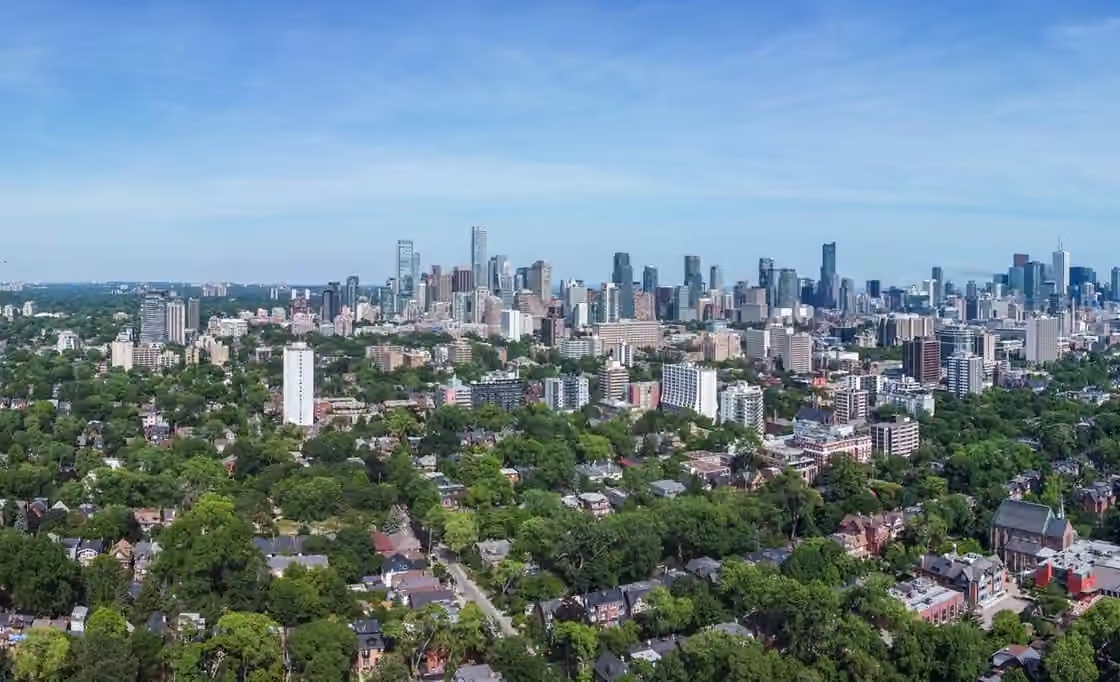 Central Toronto
The Annex
Bloor is busy and practical; the residential streets immediately north are slower and architectural. A useful choice for a conversation-led evening with a walk between dinner and a cultural stop.
 Central Toronto
Kensington Market
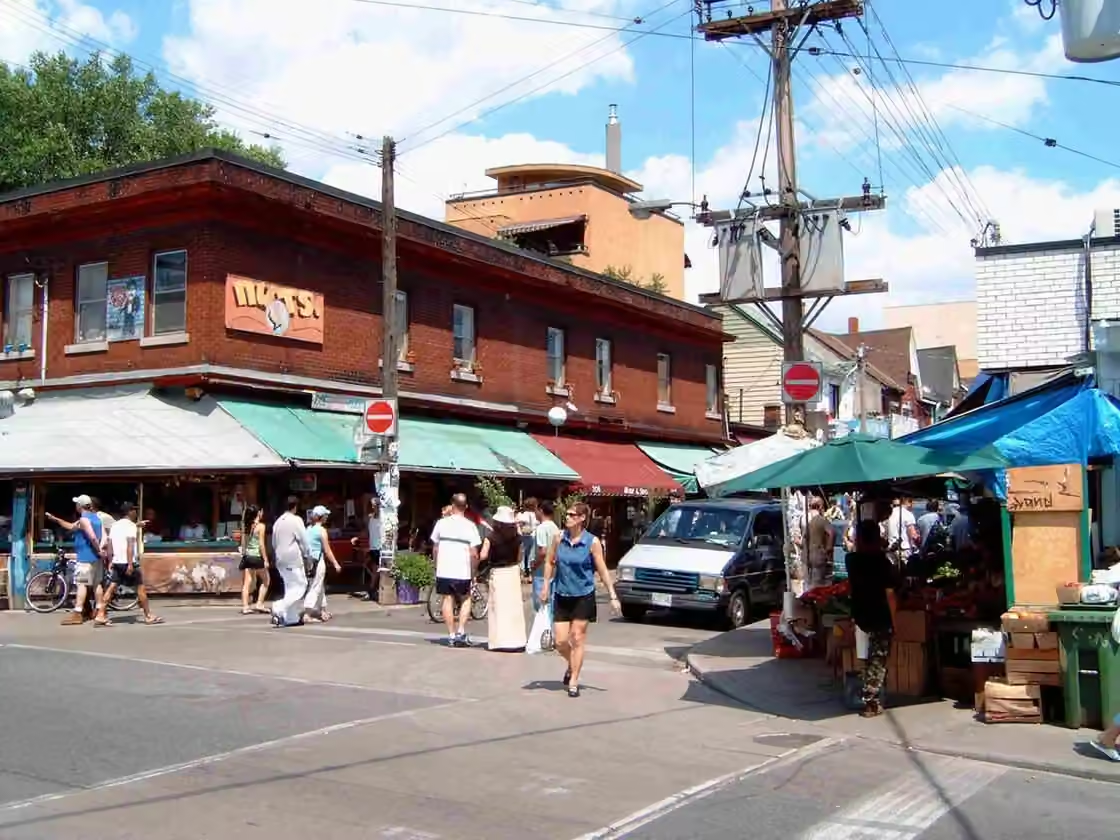
Small shops, food counters and residential lanes create a close, informal street life. Best approached on foot, with time for several small stops rather than one tightly scheduled attraction.
 Central Toronto
Chinatown
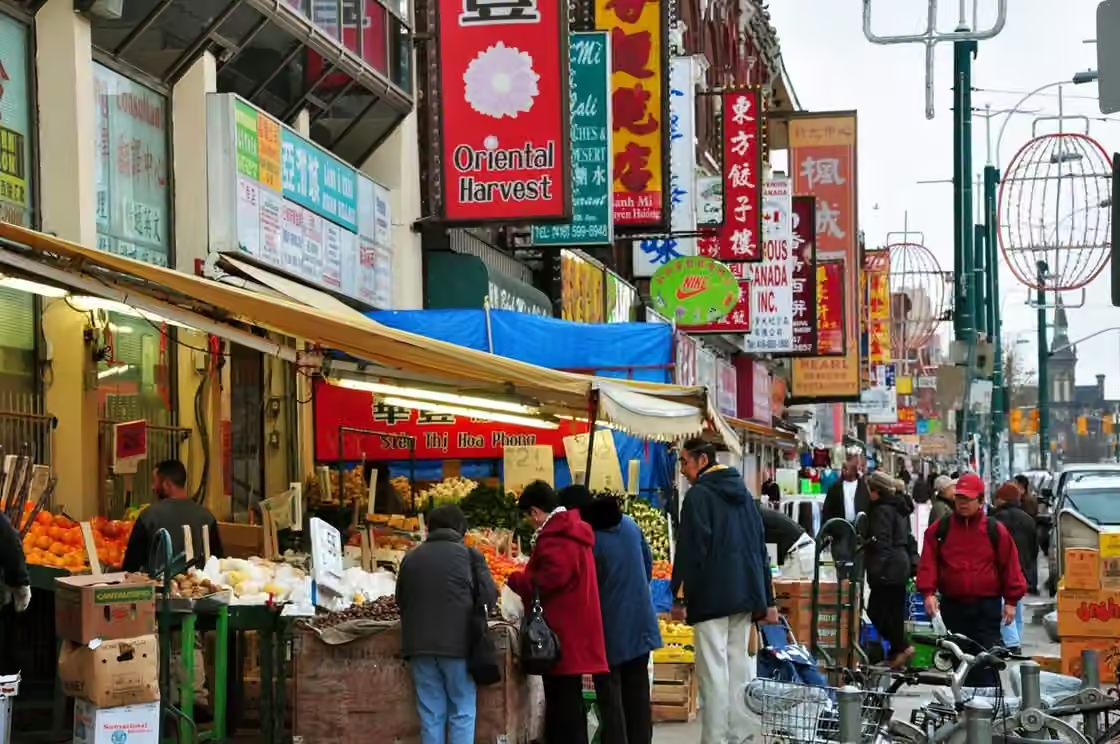
A working shopping district where groceries and everyday services share the street with restaurants. Its broad avenues feel different from nearby Kensington, and the side streets reveal a quieter residential layer.