
Kensington Market
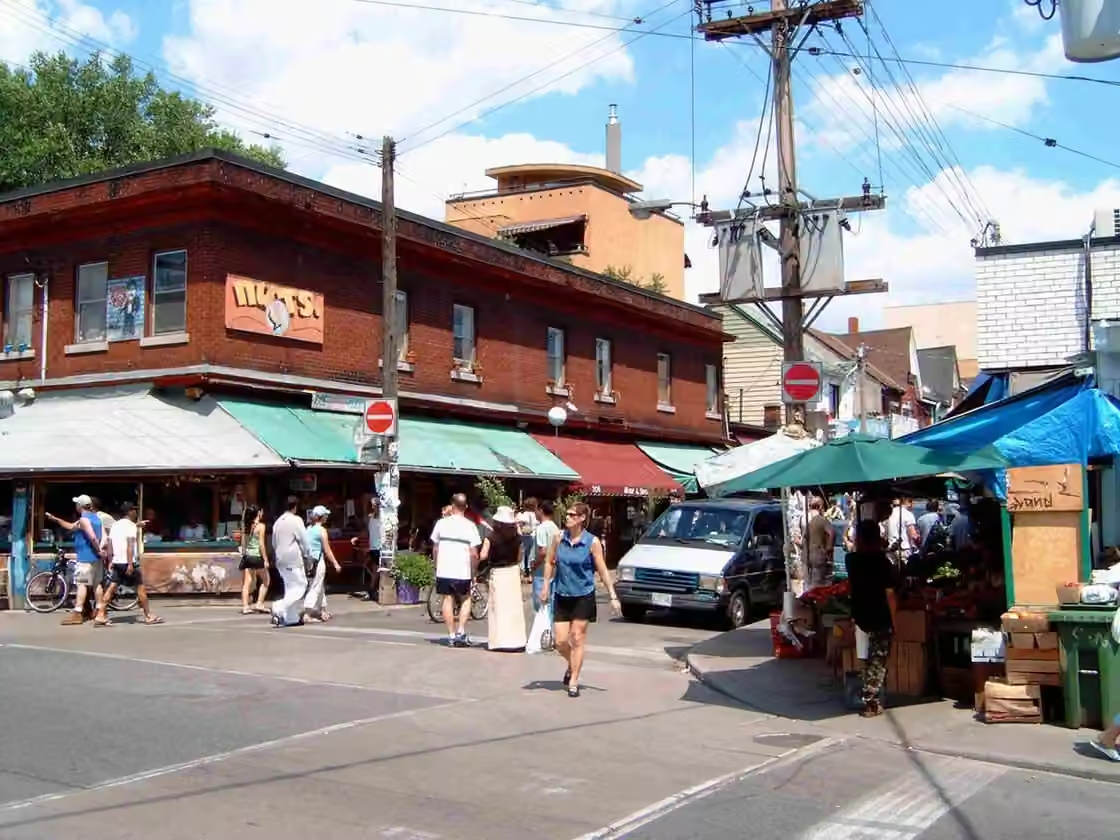
Small shops, food counters and residential lanes create a close, informal street life. Best approached on foot, with time for several small stops rather than one tightly scheduled attraction.
Spending time here
Kensington is strongest as a place to wander at a human pace. Move between the larger commercial streets and the smaller connecting blocks; notice how a shop extension, a painted house and a synagogue can occupy the same view. A market visit is more rewarding when it leaves room for everyday errands and residents rather than treating the whole area as an event venue.
Its national historic recognition applies to an evolving neighbourhood, not a single monumental building. That is a helpful way to understand its present atmosphere. The layering is the point: new businesses enter an older street pattern, and visitors encounter a mixture of ordinary commerce and cultural memory. For a date, an unhurried afternoon that leads into dinner makes better use of the district than a rapid checklist of famous storefronts.
A market built out of houses
Kensington Market’s unusual form is the first clue to its history. Many shops occupy houses whose ground floors were extended toward the pavement. Above awnings and display windows, domestic rooflines remain visible. The narrow streets and rear lanes make commerce and housing feel inseparable, because they developed together rather than being planned as distinct zones.
The land formed part of George Taylor Denison’s Bellevue estate before subdivision in the nineteenth century. British and Irish residents occupied the growing district, and workers’ cottages appeared on small lots and lanes. Parks Canada identifies this dense pattern, including alterations made by successive occupants, as a central part of the neighbourhood’s heritage.
The Jewish market
In the early twentieth century, Jewish immigrants from Europe developed the neighbourhood’s market economy. Small shops could be operated close to home, while local congregations helped create networks of support. The Kiever and the Minsker remain important physical references to that period. Their presence connects food retailing with religious life and community institutions.
The Kensington Market Historical Society describes how the Kiever congregation grew out of The Ward and acquired property on Bellevue Avenue in 1917. Its synagogue was completed in 1927. A credit society and women’s and youth organizations also operated around the congregation. These were practical structures for sustaining households through migration and financial difficulty, not simply decorative additions to a shopping district.
Many communities, continual change
From the middle of the twentieth century, the market’s commercial and residential population became increasingly varied. Portuguese and Italian newcomers were among those who followed earlier settlers, with Caribbean and Asian businesses adding further connections. The name Kensington Market came to describe a place held together by a pattern of small-scale trade rather than by one community alone.
The City’s heritage plan makes clear that this mixed use has required negotiation. Zoning introduced in the 1950s classified much of the area as residential, despite existing businesses and light industry. That tension helps explain why preserving Kensington involves more than keeping façades. The ability to adapt a small property to changing work and family needs is part of the history itself.
Sources & further reading
Researched from the sources below. The description of the neighbourhood’s character is SceneTO’s editorial interpretation.
Parks Canada: Kensington Market National Historic Site ↗Kensington Market Historical Society: institutions in and around the market ↗City of Toronto: Kensington Market HCD Plan ↗Keep exploring
All neighbourhoods ↗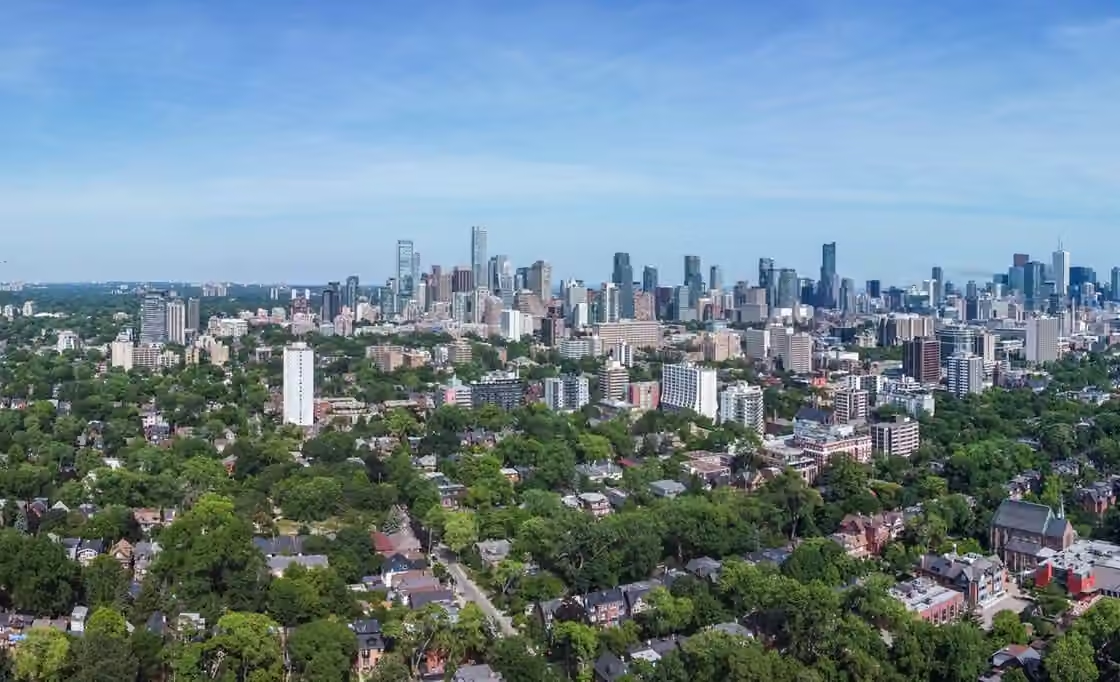 Central Toronto
The Annex
Bloor is busy and practical; the residential streets immediately north are slower and architectural. A useful choice for a conversation-led evening with a walk between dinner and a cultural stop.
 Central Toronto
Chinatown
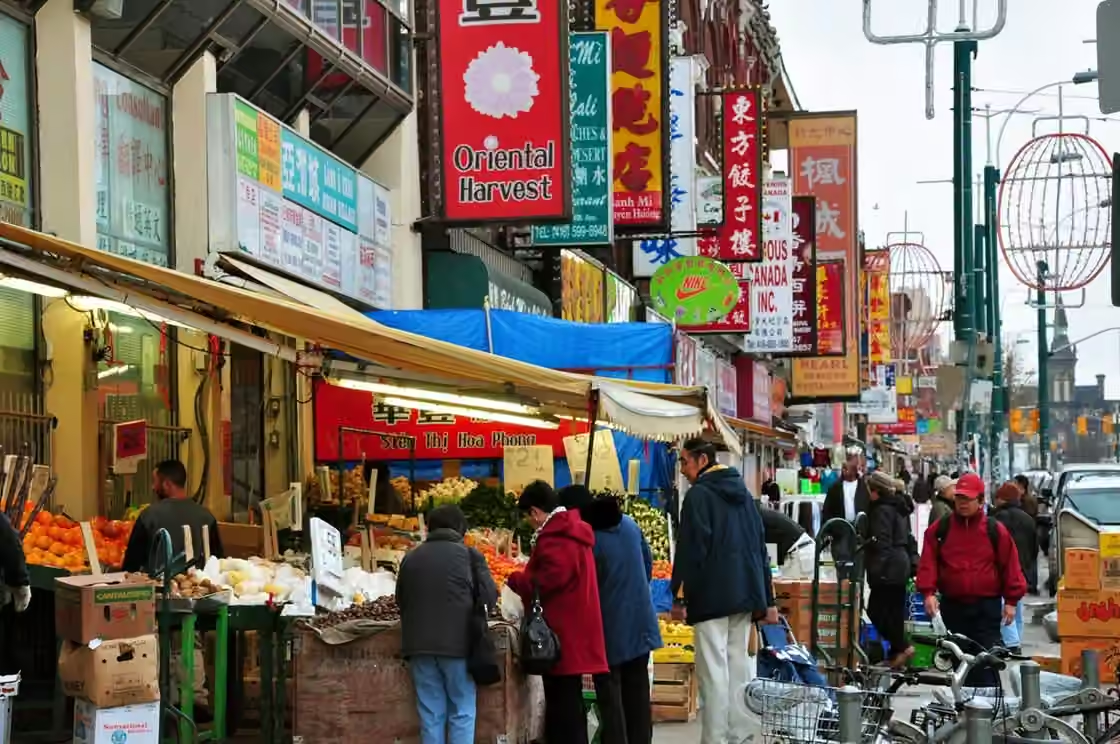
A working shopping district where groceries and everyday services share the street with restaurants. Its broad avenues feel different from nearby Kensington, and the side streets reveal a quieter residential layer.
 Central Toronto
Cabbagetown
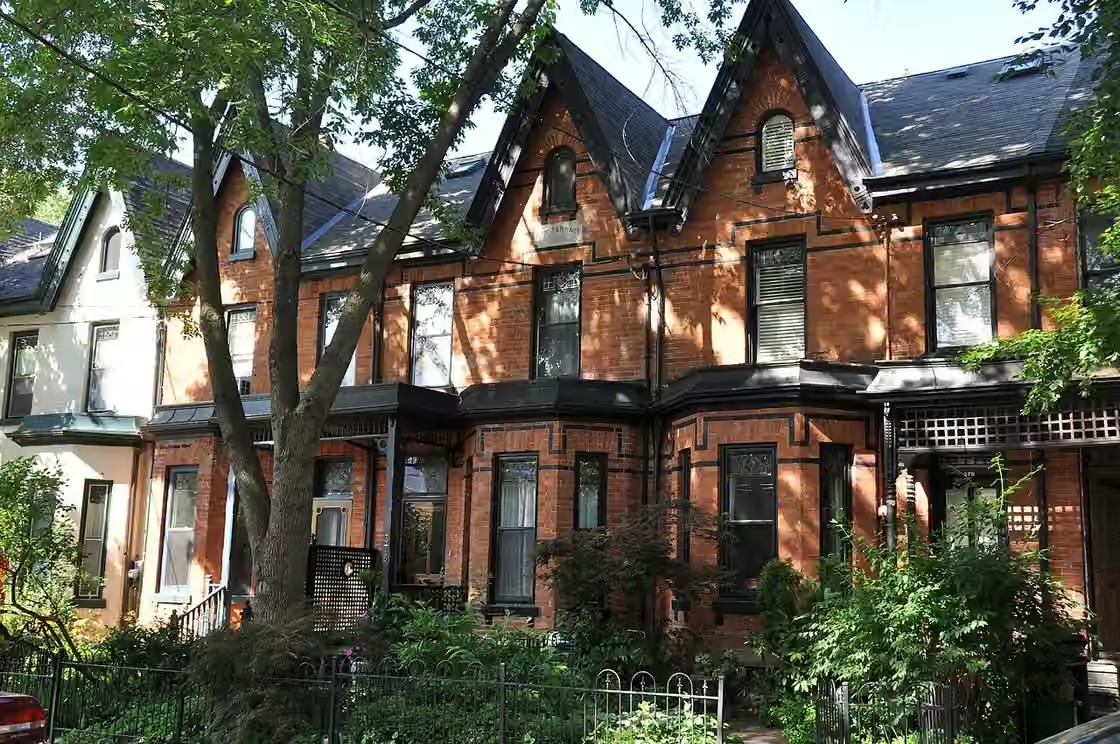
A district for looking closely at houses and walking towards the Don, with Parliament supplying the main-street activity. Its residential interior makes a quieter outing than Toronto’s concentrated nightlife strips.