
Chinatown
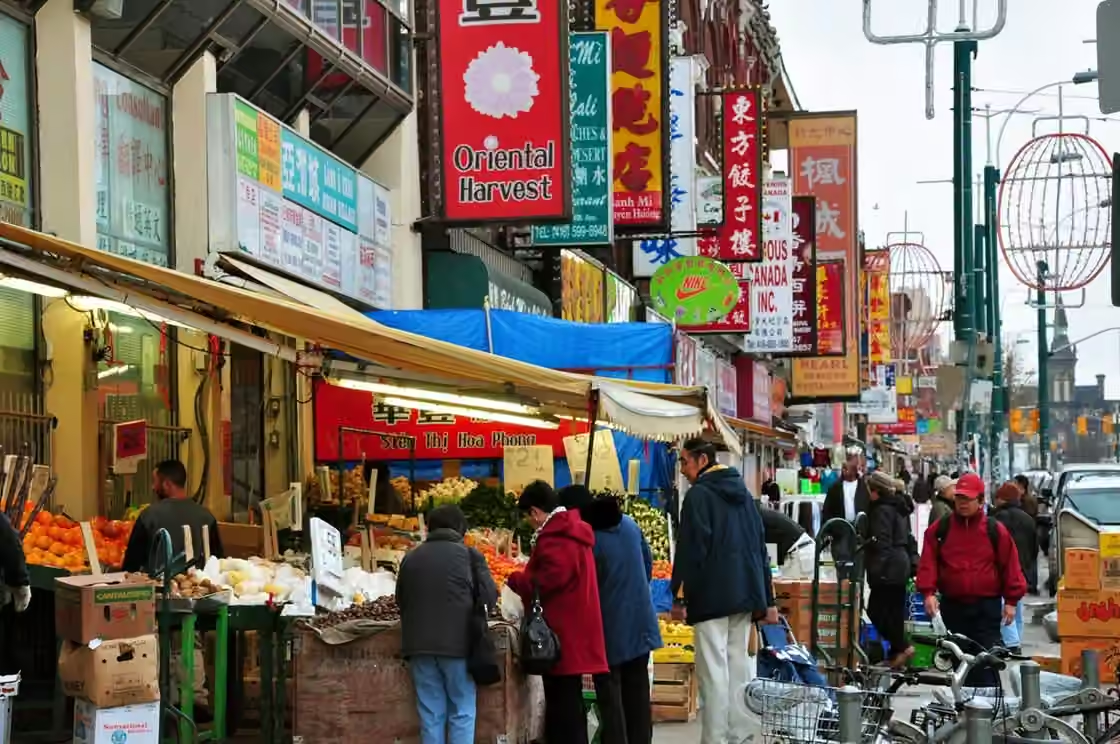
A working shopping district where groceries and everyday services share the street with restaurants. Its broad avenues feel different from nearby Kensington, and the side streets reveal a quieter residential layer.
Spending time here
Approach Chinatown as a place where people come to buy food, use services and meet, as well as a destination for a meal. A walk along both Spadina and Dundas gives a better sense of its scale than stopping at the intersection alone. Look at upper floors and side-street entrances: the social infrastructure is less immediately visible than restaurant signs.
For an evening, choose the restaurant around the kind of meal you want, then make a small walking loop before or after. Kensington is close enough to combine with it, but deserves its own time and attention. The strongest reason to visit is the district’s continued everyday use. Its history is still present in the relationship between homes, shops and institutions, rather than confined to a commemorative marker.
Before Spadina and Dundas
Toronto’s first substantial Chinatown developed around Elizabeth Street in The Ward, closer to today’s City Hall. Chinese residents built businesses and associations in a city where exclusionary policies restricted immigration and opportunity. The history of the present district therefore begins outside its familiar intersection, with people making institutions under difficult conditions.
The City Archives chronology records the campaigns to protect what remained of the original Chinatown as municipal redevelopment advanced. Construction of the new City Hall and Nathan Phillips Square displaced much of that district. It is important to understand the movement west as a response to land acquisition and demolition, alongside other changes, rather than a simple voluntary relocation to a more convenient shopping street.
Building a new centre
As Jewish residents moved from the Spadina area toward newer neighbourhoods, properties became available to Chinese households and businesses. Shops and community institutions relocated west along Dundas, and new arrivals enlarged that settlement. Changes to immigration policy in the 1960s brought further migration from Hong Kong and other places across Asia.
Simon Fraser University’s Chinese Canadian history project describes a district extending beyond restaurant frontage: associations, rooming houses and small businesses occupied Huron, Beverley and D’Arcy as well as the main streets. The broad avenues and narrow residential streets worked together. Chinatown supported daily life, employment and social connections, with food only one part of a larger urban system.
Defending the district’s form
The new Chinatown also faced redevelopment pressure. In the early 1970s, community organizations opposed plans to replace much of the lower-rise area with denser development. Subsequent planning shifted toward retaining more of the existing neighbourhood. That history helps explain the importance of modest buildings and the layered commercial spaces above and below street level.
The Chinatown BIA describes the downtown neighbourhood as one of several Chinese commercial centres across the Greater Toronto Area. Spadina is therefore neither the whole history nor the sole present-day centre of Chinese Toronto. Its businesses also reflect connections with Vietnam and other parts of Asia. Reading every storefront as an expression of one fixed culture would miss the district’s internal diversity.
Sources & further reading
Researched from the sources below. The description of the neighbourhood’s character is SceneTO’s editorial interpretation.
City of Toronto Archives: Chinese History in Toronto ↗Simon Fraser University: Toronto Chinatown ↗Chinatown BIA: neighbourhood history ↗Keep exploring
All neighbourhoods ↗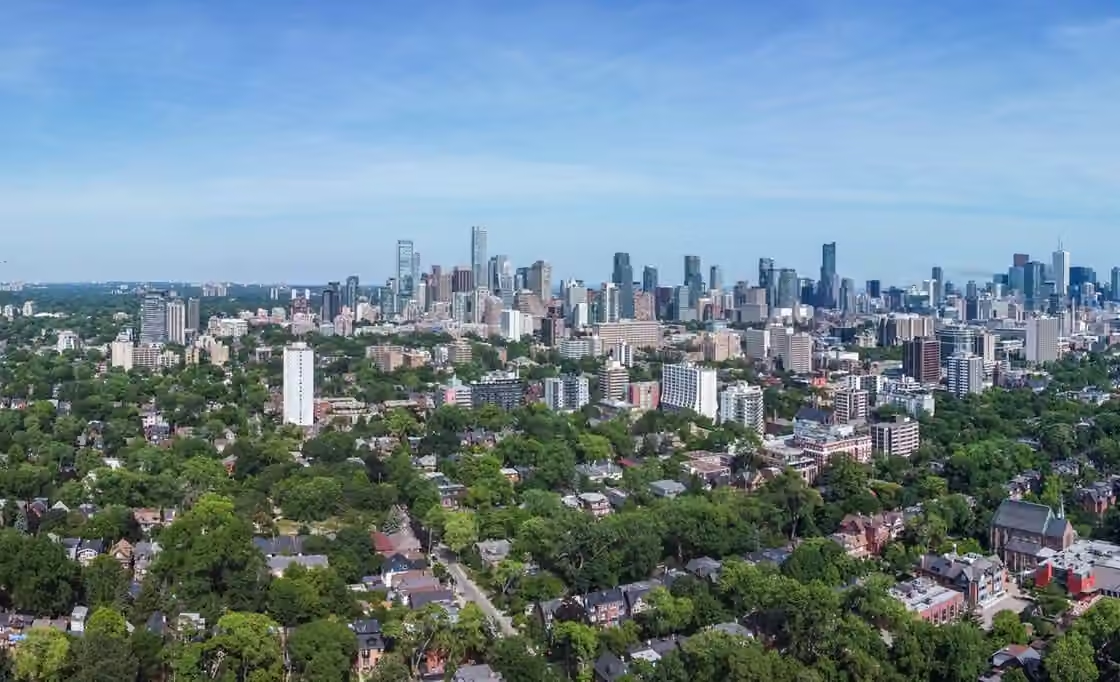 Central Toronto
The Annex
Bloor is busy and practical; the residential streets immediately north are slower and architectural. A useful choice for a conversation-led evening with a walk between dinner and a cultural stop.
 Central Toronto
Kensington Market
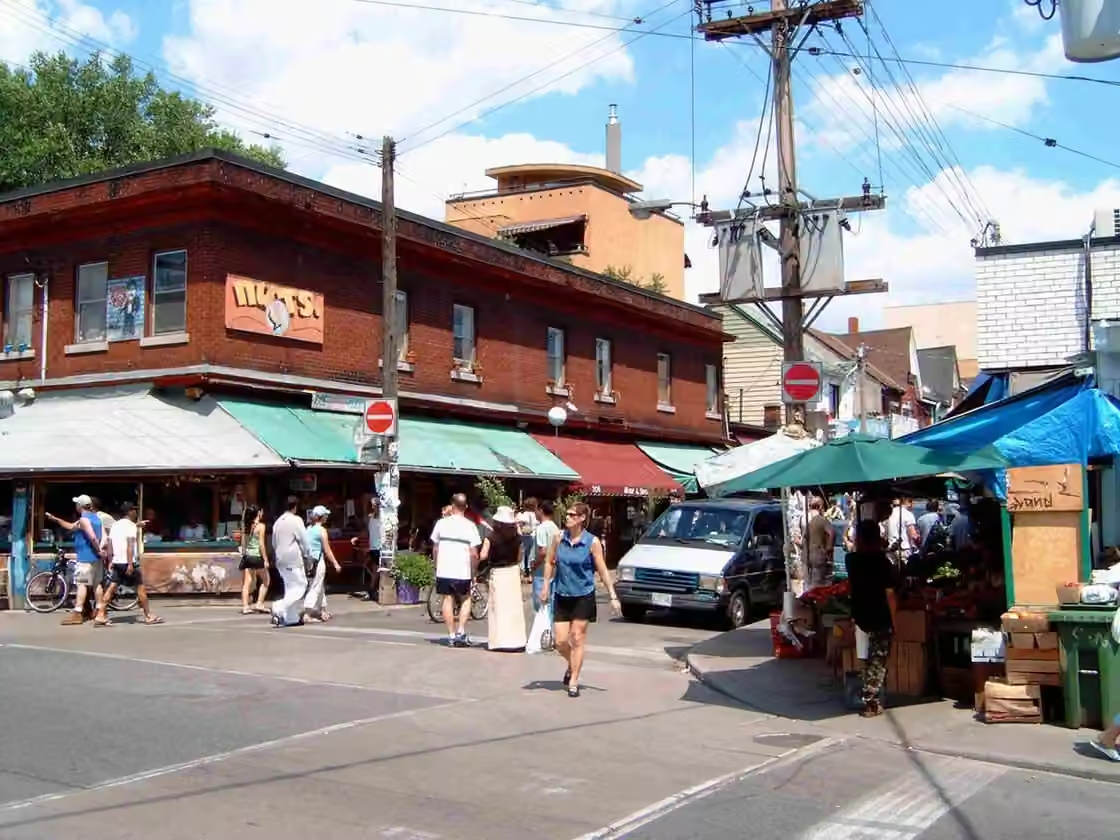
Small shops, food counters and residential lanes create a close, informal street life. Best approached on foot, with time for several small stops rather than one tightly scheduled attraction.
 Central Toronto
Cabbagetown
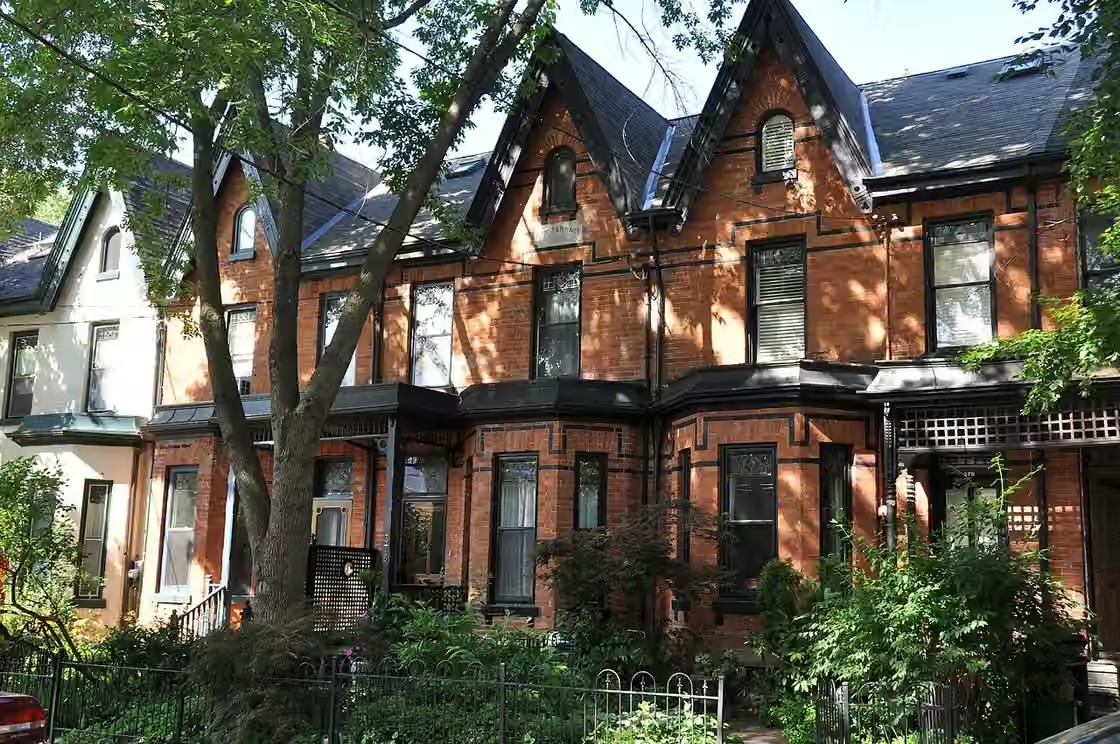
A district for looking closely at houses and walking towards the Don, with Parliament supplying the main-street activity. Its residential interior makes a quieter outing than Toronto’s concentrated nightlife strips.