
Cabbagetown
A district for looking closely at houses and walking towards the Don, with Parliament supplying the main-street activity. Its residential interior makes a quieter outing than Toronto’s concentrated nightlife strips.
Spending time here
For a visit, Parliament is the practical starting point before a walk through the residential streets towards Riverdale Park West. The quieter routes reward attention to details rather than a rush between attractions. Riverdale Farm, which opened in 1978 after the old zoo closed, gives the eastern edge a different rhythm again. Cabbagetown is a good choice for an afternoon walk followed by a meal; visitors looking for a dense late-night bar circuit may find another district a better match. These are inhabited streets, and the most appealing houses remain private homes.
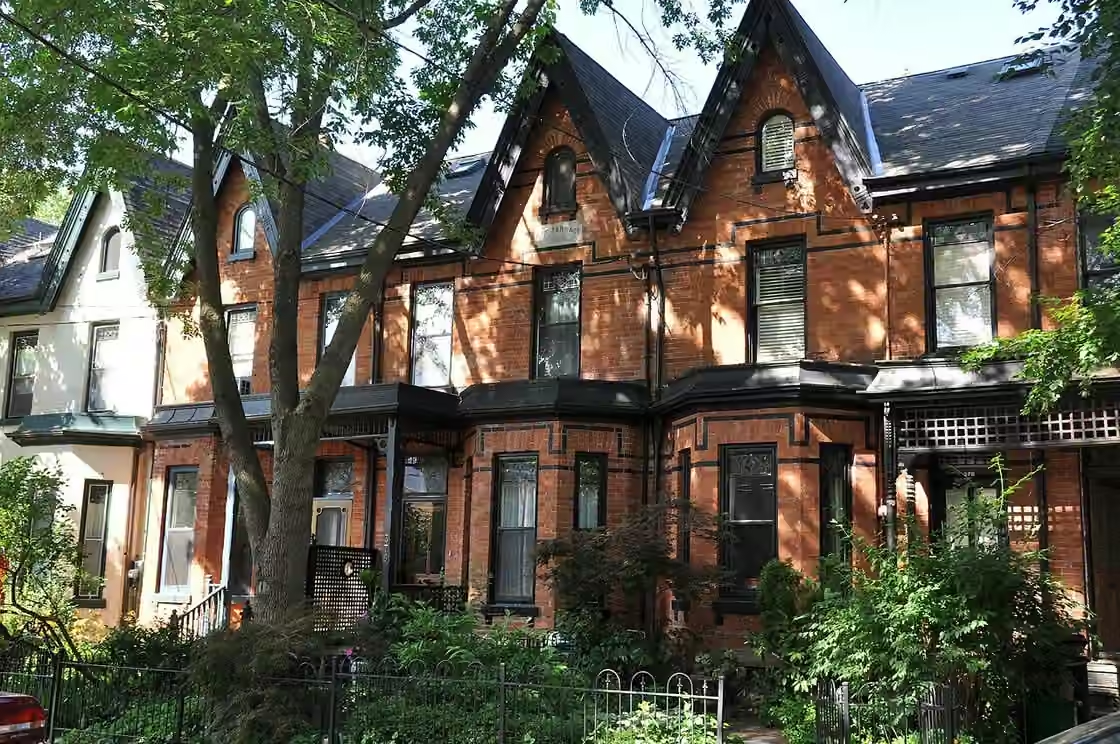
A good architectural walk compares several adjoining houses instead of seeking only the grandest example. Repeated forms make small differences easier to see: a rebuilt porch, a change in brickwork or a surviving piece of trim can reveal how maintenance and personal choices have altered the original streetscape.
A changing name and geography
The familiar story of Cabbagetown’s name links it to Irish immigrants growing vegetables in their gardens during the nineteenth century. The Cabbagetown Preservation Association places the original area associated with that name south of Gerrard. The geography visitors now recognise through restored houses lies substantially farther north. Keeping that shift in mind prevents the surviving architecture from standing in for the whole history of the community.
Work helped shape settlement near the Don. Industrial employers and institutions drew residents to an eastern suburb of the growing city. Housing ranged from workers’ cottages to larger middle-class and wealthy households. It was never a district of only one kind of house or one kind of resident. The mix is still legible in differences of lot size, frontage and architectural ambition.
What the houses show
The bay-and-gable form is a useful place to start looking. Tall, narrow façades combine a projecting bay window with a pointed roofline, often repeated in attached or semi-detached pairs. Brick patterns, wooden trim and the treatment of porches provide variation within that shared form. The houses were built to fit urban lots efficiently, so their appearance also records the practical business of subdivision and construction.
The City’s account of Cabbagetown Southwest traces late nineteenth-century residential development through later industrialisation and economic decline. By the middle of the twentieth century, the future of older neighbourhoods was often framed around clearance and rebuilding. Conservation campaigns helped establish an alternative, retaining streets and buildings that might otherwise have disappeared. The heritage districts now recognise the collective value of those streetscapes, rather than only a few exceptional houses.
Preservation and change
The restoration associated with Cabbagetown from the 1960s and 1970s onward changed both buildings and property values. It brought investment and protected much of the historic fabric, while also changing who could afford to live in it. A careful account needs room for both outcomes. The neighbourhood’s attractiveness today comes partly from preservation, but it should not erase the less prosperous periods or the people who lived through them.
Sources & further reading
Researched from the sources below. The description of the neighbourhood’s character is SceneTO’s editorial interpretation.
Cabbagetown Preservation Association: neighbourhood history ↗City of Toronto: Cabbagetown Southwest research ↗Cabbagetown HCD Committee: the conservation districts ↗Keep exploring
All neighbourhoods ↗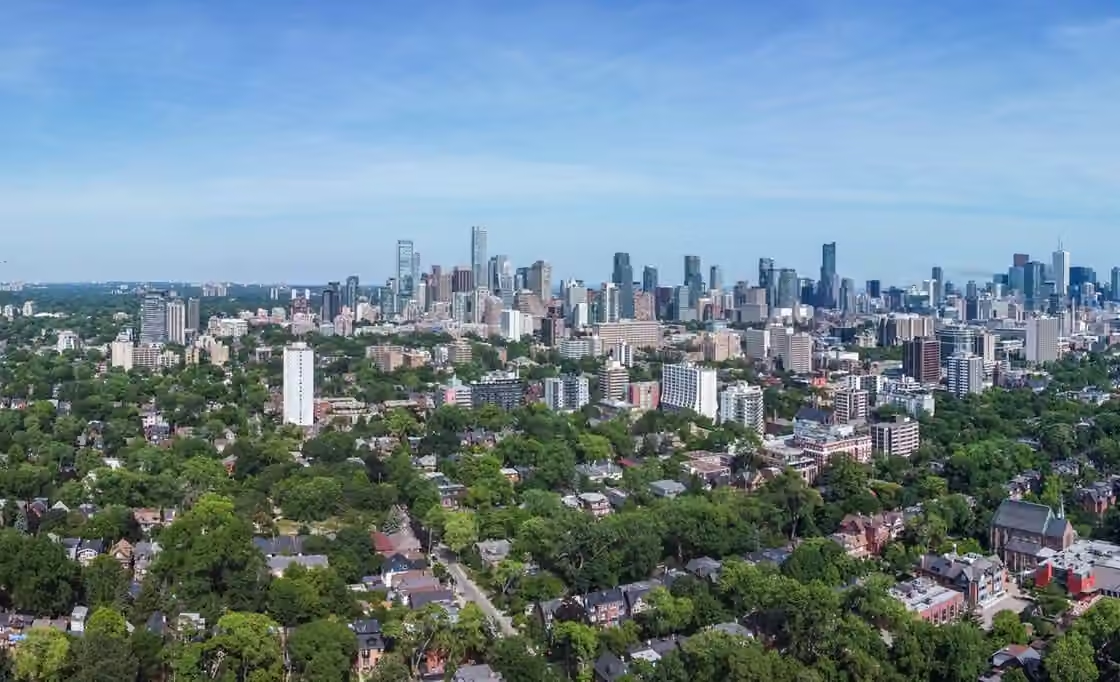 Central Toronto
The Annex
Bloor is busy and practical; the residential streets immediately north are slower and architectural. A useful choice for a conversation-led evening with a walk between dinner and a cultural stop.
 Central Toronto
Kensington Market
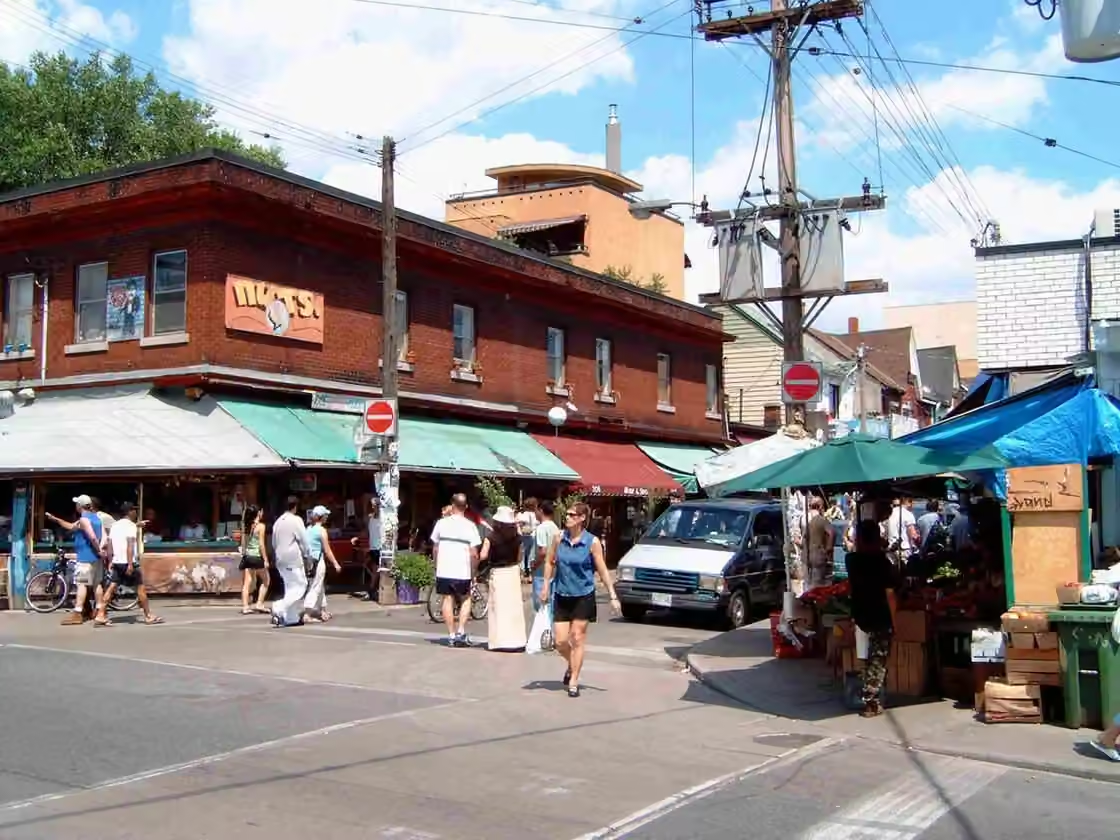
Small shops, food counters and residential lanes create a close, informal street life. Best approached on foot, with time for several small stops rather than one tightly scheduled attraction.
 Central Toronto
Chinatown
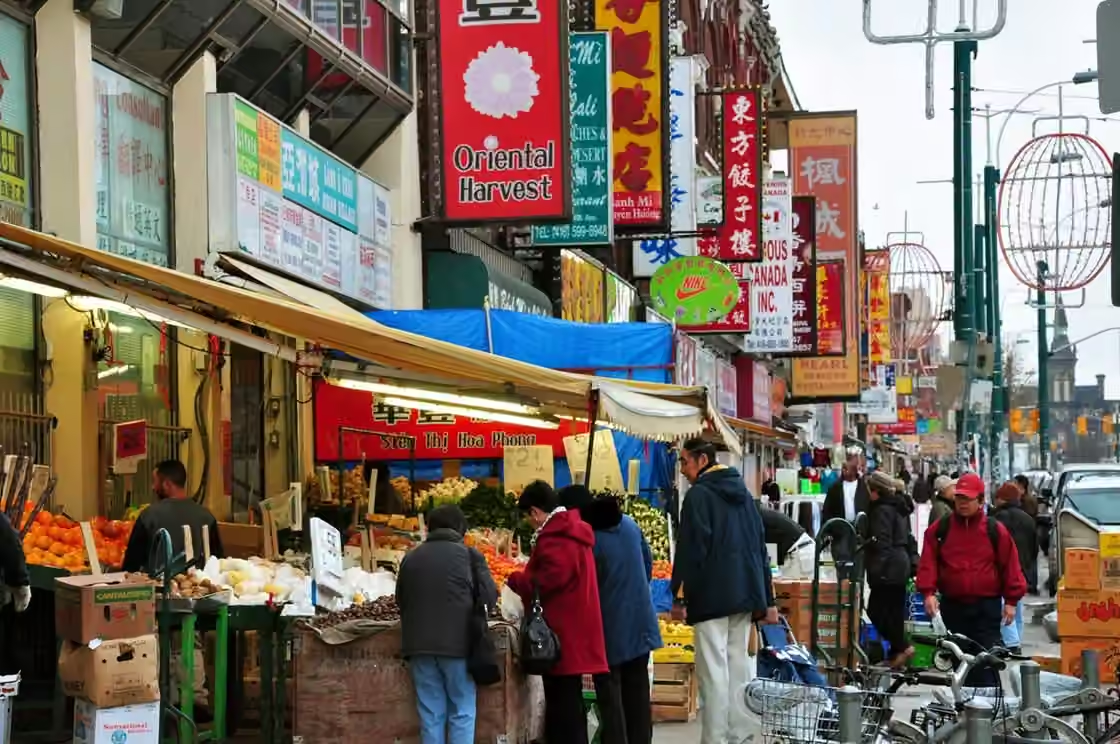
A working shopping district where groceries and everyday services share the street with restaurants. Its broad avenues feel different from nearby Kensington, and the side streets reveal a quieter residential layer.