
Roncesvalles
A walkable neighbourhood shopping street with a steady daytime rhythm and relatively low-key evenings. A strong fit for dinner and a film, or a longer walk linking the avenue with nearby green space.
Spending time here
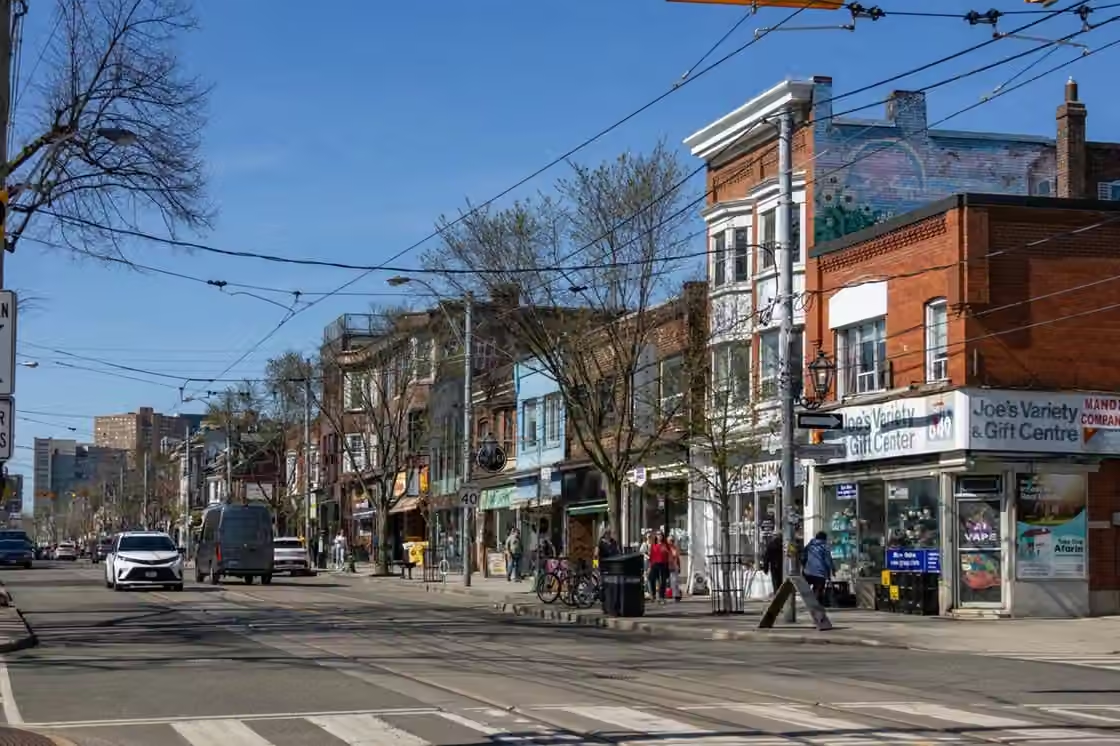
The current BIA directory describes a main street of small shops and services with sidewalk gardens and nearby parks. Its appeal is the ease of combining ordinary activities: a walk, something to eat and a cultural stop can occupy a manageable stretch. The avenue is long enough that choosing a northern or southern cluster makes an evening simpler.
For a date, dinner near a booked Revue screening gives the plan a clear structure; check the actual programme before building around it. In daylight, extend the walk toward High Park or the lake if time and the route allow. Neither needs to be added just to make the outing seem fuller.
Look at the junctions and the side streets as well as the storefronts. They show how a transport corridor became a residential neighbourhood’s shared centre. Roncesvalles remains distinctive because that practical role is still legible, alongside the cultural institutions that have given generations of residents a reason to return.
Estates before the streetcar suburb
The land on either side of Roncesvalles once belonged to large estates. John Howard’s Sunnyside property lay to the west, and Walter O’Hara’s West Lodge estate to the east. O’Hara named the avenue after the place where he had fought during the Peninsular War. Other surrounding street names preserve family associations from this period.
These colonial property histories sit within a much longer Indigenous landscape. The local BIA acknowledges the area’s treaty relationships and the continuing presence of Indigenous communities. For visitors, the estate story is useful for understanding the later street layout; it should not be mistaken for the beginning of human life in this part of Toronto.
How transit shaped the avenue
The present form emerged largely in the early twentieth century. The City’s built-form study identifies streetcar access by 1908 as a major stimulus to development. Houses spread along the side streets, while the avenue acquired shops and institutions serving the growing residential population. Much of its recognizable scale was established within a comparatively short period.
That relationship remains easy to read. Small commercial units face the main street, with residential blocks close behind. Churches and schools interrupt the shopfront rhythm, demonstrating that the avenue was built for everyday life. Its architecture is most revealing as a sequence of buildings rather than as a set of isolated masterpieces.
Polish institutions and a neighbourhood cinema
After the Second World War, Polish residents helped establish the cultural identity for which Roncesvalles became widely known. German and Lithuanian communities also contributed to that change. St. Casimir’s church, opened in 1954, became an important institutional reference, alongside businesses and organizations serving Polish Canadians. The annual Polish Festival continues to make that history publicly visible.
The Revue adds a different form of continuity. A purpose-built cinema opened here in 1912, during a period when moving pictures were becoming a neighbourhood entertainment. Its own history records opposition from the school board before the theatre opened. Today it is operated by the nonprofit Revue Film Society, keeping a cultural use within the same local building.
These institutions help explain why the street’s identity survives changes in its residents and businesses. A neighbourhood can retain a meaningful connection to a migrant community even when that community is geographically dispersed. Roncesvalles is therefore best understood through continuing institutions and use, rather than as a frozen ethnic enclave.
Sources & further reading
Researched from the sources below. The description of the neighbourhood’s character is SceneTO’s editorial interpretation.
Roncesvalles Village BIA: village history and present-day street ↗City of Toronto: Dundas–Roncesvalles Built Form Study ↗Revue Cinema: history ↗TABIA: Roncesvalles Village ↗Keep exploring
All neighbourhoods ↗ West Toronto
Little Italy
A broad restaurant street with patios and evening activity, surrounded by quieter residential blocks. It suits dinner followed by a short walk, with enough variety to avoid committing the whole night to one venue.
 West Toronto
Ossington
Concentrated and sociable, especially in the evening, with restaurants close enough to combine with a drink and a walk. The residential streets immediately alongside it have a much quieter rhythm.
 West Toronto
West Queen West
A long, varied stretch for browsing and going out, with the park providing a pause between commercial blocks. It works best when you choose a smaller cluster rather than trying to cover the whole street in one evening.