
Little Italy
A broad restaurant street with patios and evening activity, surrounded by quieter residential blocks. It suits dinner followed by a short walk, with enough variety to avoid committing the whole night to one venue.
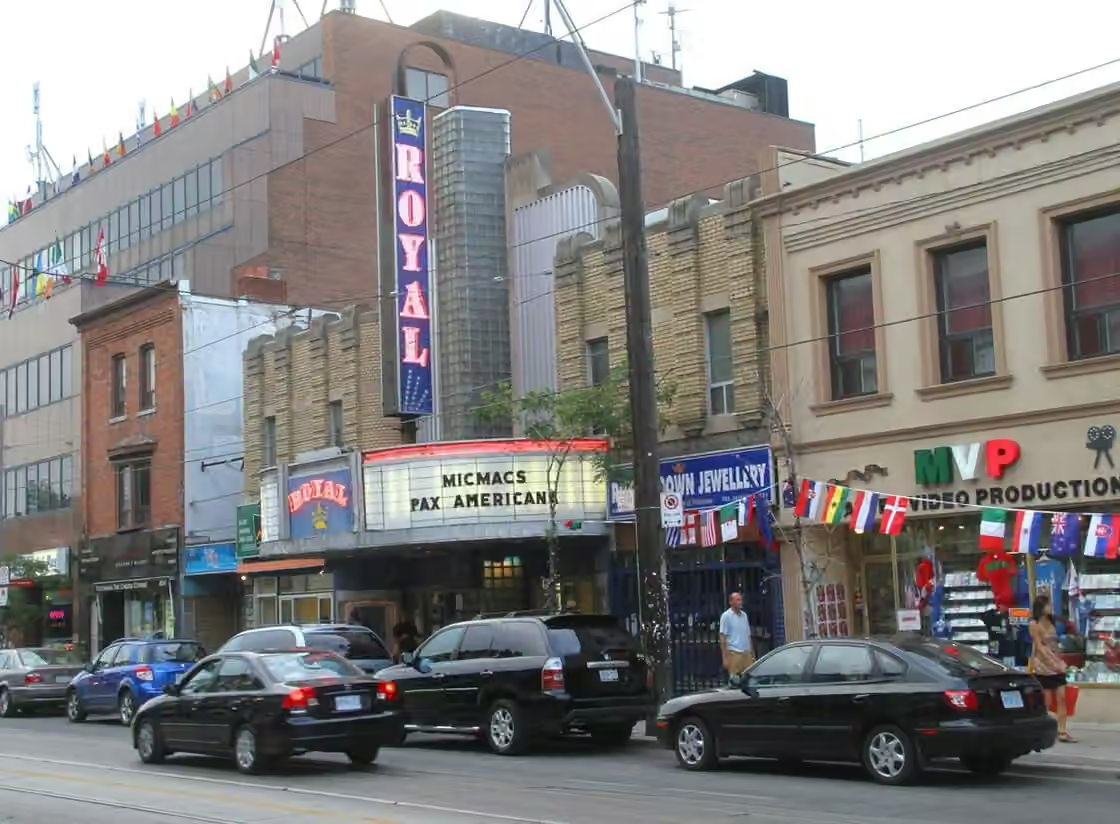
Spending time here
For a first visit, follow College and take one side-street detour rather than treating every stop as an attraction. The contrast between commercial frontage and residential porches explains much of the neighbourhood’s appeal. Restaurants and entertainment remain central to the BIA’s current directory, while its revitalization work shows that the street is still negotiating its next phase.
Little Italy works particularly well for an early dinner that can become a longer evening. Choose a table first if timing matters, then leave room for a walk. The name is useful orientation, but the present-day food and cultural offering extends well beyond an exclusively Italian itinerary.
Before Little Italy
College Street’s name points to a history older than its Italian identity. Its early route was tied to the University of Toronto’s land grant, and the road became part of the expanding city as large estates were subdivided. The small lots and closely spaced houses behind the commercial frontage record that transformation from privileged landholding to a densely occupied urban district.
The neighbourhood was never culturally uniform. The historical walking tour developed with the College Street BIA also traces Black religious life here, including the former Christ Church St. James near College and Shaw. Jewish and British residents, and later Portuguese households, contributed to the area that a single present-day name can only partly describe.
Making an Italian main street
Italian settlement grew during the early twentieth century and expanded after the Second World War. Employment and family sponsorship drew newcomers to Toronto; nearby households supported a network of shops and social meeting places. Domestic gardens and work done from home mattered alongside the more visible commercial street. Little Italy was a place to make a living as well as a place to maintain connections with Italy.
Café Diplomatico opened in 1968, and espresso drinking on its patio became one of the district’s familiar public rituals. The Royal Cinema offers another way into this history: it screened Italian films, hosted Italian theatre, and later operated as the Golden Princess with Chinese films. Its changing programmes reveal the different audiences who have used the same buildings.
A name that travelled beyond its residents
As Italian families and businesses moved to other parts of Toronto, College Street retained a symbolic importance that exceeded the number of Italian residents living nearby. Heritage Toronto describes the BIA’s adoption of the Little Italy name in the 1980s as a deliberate effort to retain that connection. The district is therefore both an inherited community and a public identity actively maintained by businesses and festivals.
Johnny Lombardi’s multilingual broadcasting is an especially useful part of that story. CHIN, launched in 1966, addressed communities across the city rather than a single neighbourhood. College Street’s history can be understood through such networks: people could move away while continuing to return for familiar institutions and shared occasions.
Sources & further reading
Researched from the sources below. The description of the neighbourhood’s character is SceneTO’s editorial interpretation.
Heritage Toronto: Little Italy on College Street ↗On This Spot / Little Italy BIA: University Driveway to Little Italy ↗Little Italy BIA: current directory and neighbourhood projects ↗Keep exploring
All neighbourhoods ↗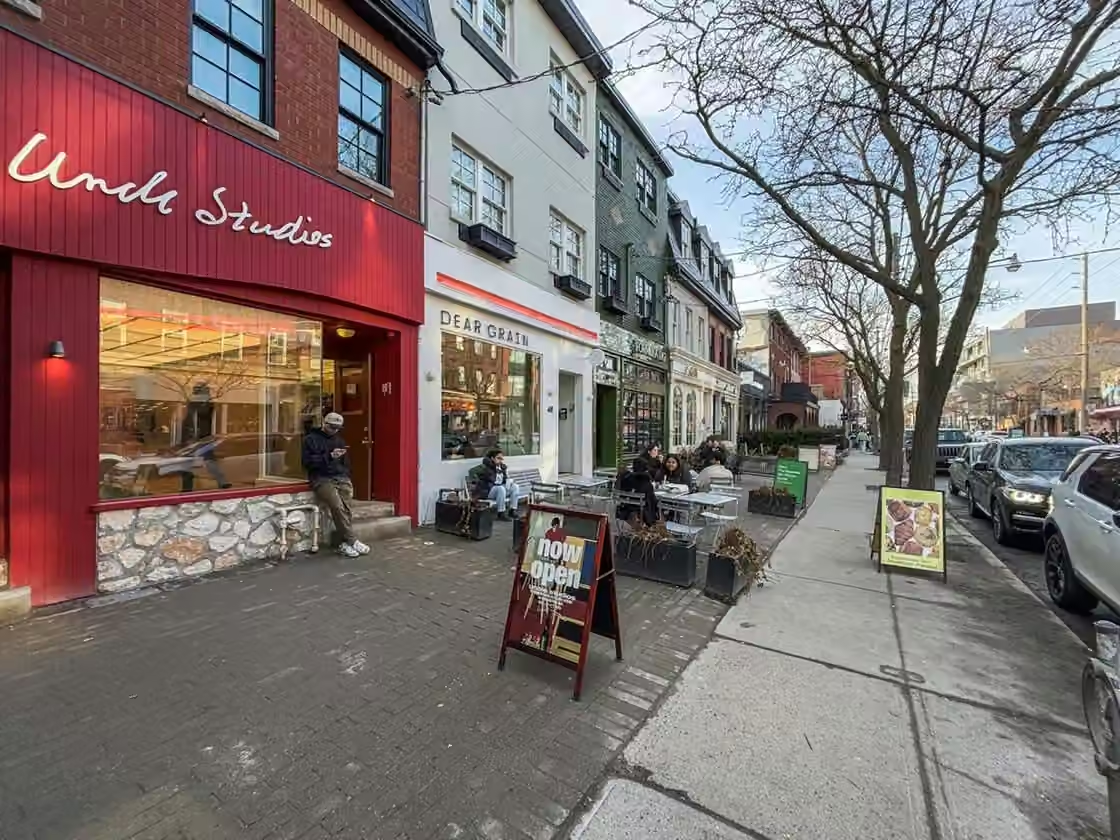 West Toronto
Ossington
Concentrated and sociable, especially in the evening, with restaurants close enough to combine with a drink and a walk. The residential streets immediately alongside it have a much quieter rhythm.
 West Toronto
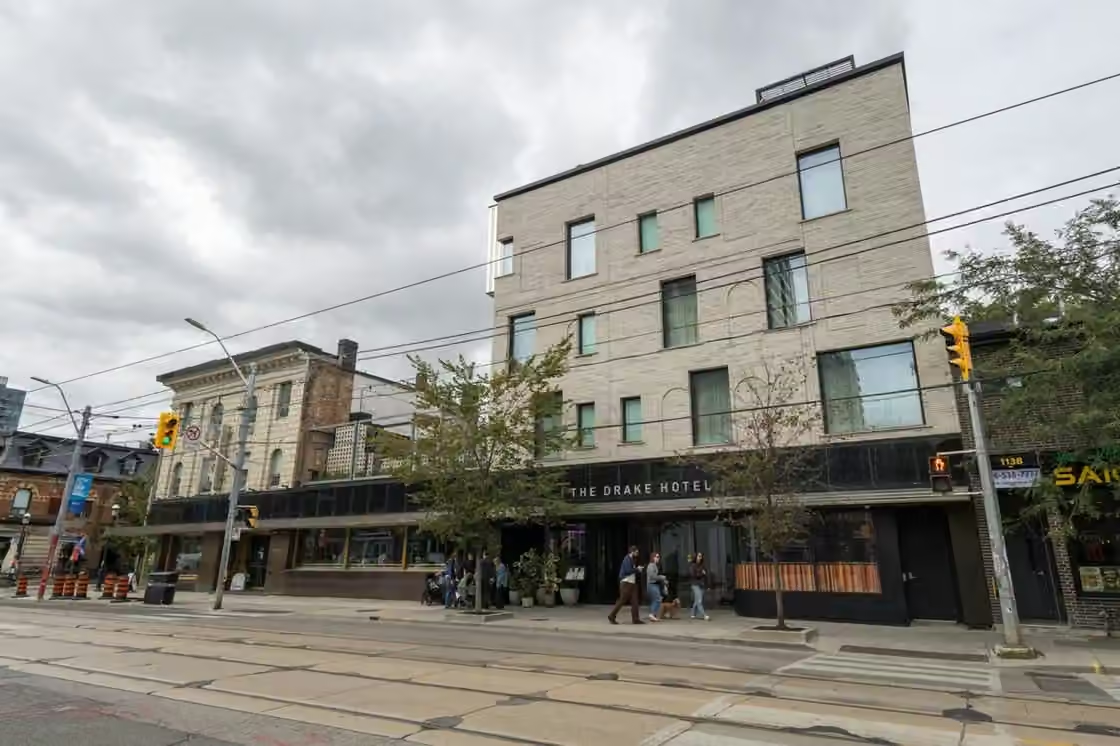
West Queen West
A long, varied stretch for browsing and going out, with the park providing a pause between commercial blocks. It works best when you choose a smaller cluster rather than trying to cover the whole street in one evening.
 West Toronto
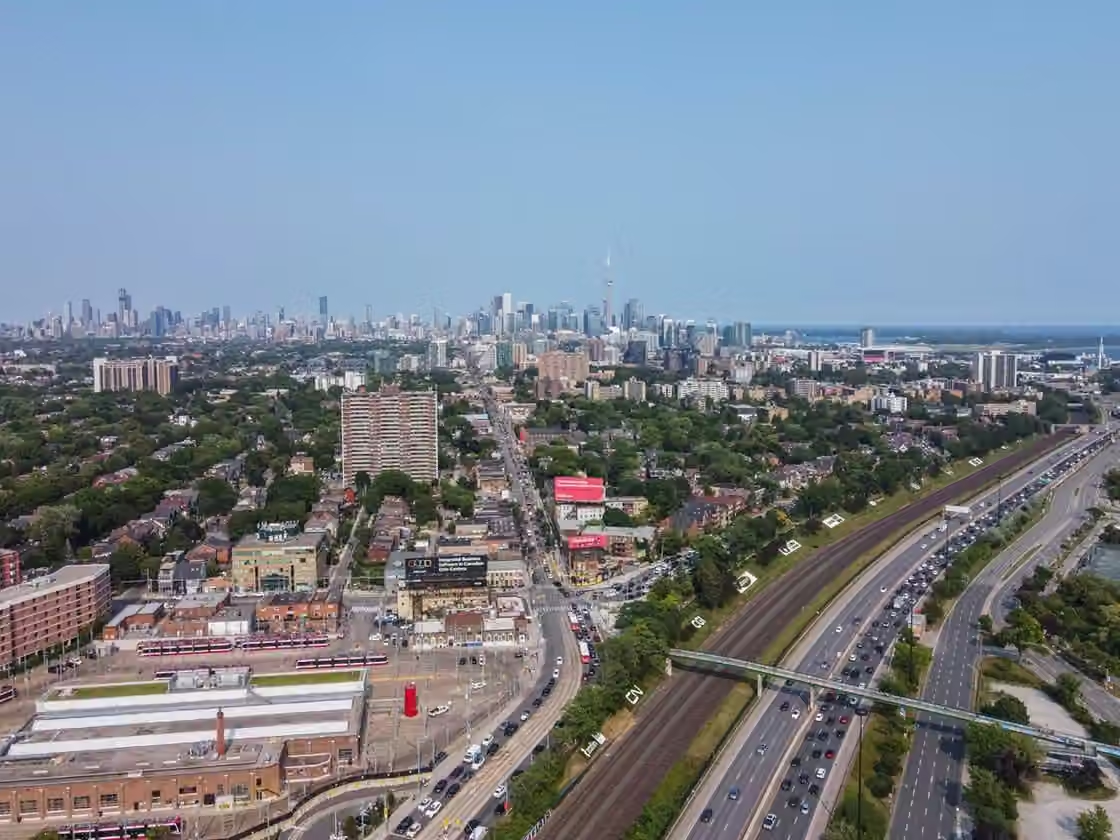
Parkdale
Queen Street mixes everyday services with restaurants and bars, while nearby blocks reveal very different scales of housing. Its social and cultural life is broader than the part encountered on an evening out.