
Ossington
Concentrated and sociable, especially in the evening, with restaurants close enough to combine with a drink and a walk. The residential streets immediately alongside it have a much quieter rhythm.
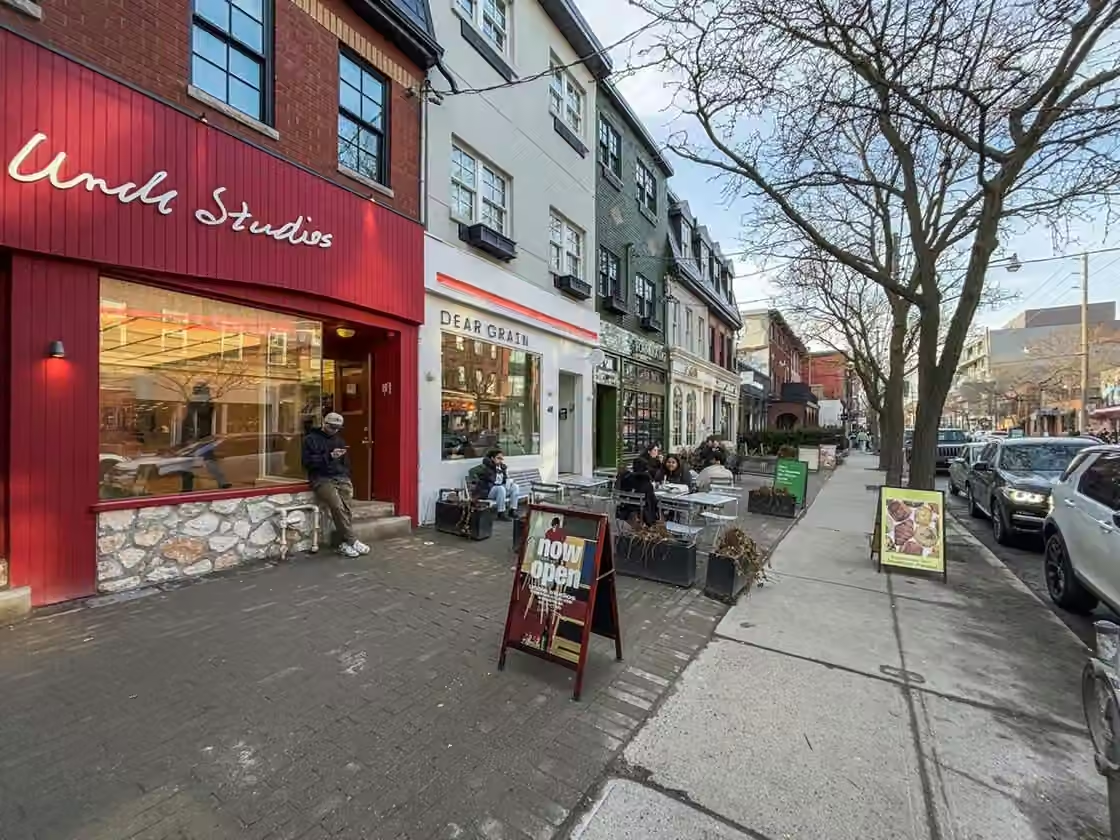
Spending time here
Ossington’s usefulness for an evening comes from proximity. A meal and a later drink can be close together, and the connection to Queen or Dundas allows the route to continue in either direction. Its compactness also means that a busy venue can affect the feel of the whole block. Book the part of the evening with a fixed start, then leave the rest flexible.
For a better sense of place, take a brief detour along a residential side street and return to the strip. That transition makes clear how tightly the destination economy sits beside people’s homes. The neighbourhood’s appeal depends on this small-scale fabric, but the current concentration of visitors is only one phase in a history of changing work, migration and use.
Why the street turns here
The stretch most visitors mean by Ossington is the short section between Queen and Dundas. Its geometry predates its restaurant reputation. This was once part of the route of Dundas Street, carrying travel north from Queen before turning west. The later consolidation of Dundas into a more continuous east–west street left this earlier alignment legible in the bend.
The City’s heritage research also traces a private road serving the Denison family’s Brookfield estate and the gradual subdivision of surrounding land. Sewers, water infrastructure and transit helped turn scattered development into a commercial street. Much of the surviving frontage dates from roughly 1880 to 1910, giving today’s businesses a framework of narrow, individually readable buildings.
Work behind the storefronts
Ossington’s history includes meatpacking, trades and ordinary local shopping. The Ossington Community Association’s historical account connects the Levack family and local stockyards with buildings on the strip. Fire and library services also established a civic presence near Queen. These uses remind us that the street once served a nearby working population as much as passing visitors.
The important continuity is physical scale. A deep lot and modest frontage can accommodate changing activities while keeping a recognizable building on the street. A former workshop may be remembered in an entrance or roofline even after its occupation changes. Looking at upper brickwork is often more informative than reading the latest sign at eye level.
Portuguese and Vietnamese connections
Postwar migration changed the surrounding residential blocks. The community association’s account describes Portuguese settlement after earlier Italian and eastern European populations, and later Vietnamese businesses. These communities gave the district commercial and social identities long before it acquired its current status as a place to go out.
Golden Turtle has served Vietnamese food on Ossington since the late 1980s. In a Toronto Metropolitan University interview, Linda Nguyen describes how the family marks Tết. Even on a busy night at the restaurant, they make time to visit the temple together on Lunar New Year’s Eve. She also shares the family recipe for braised pork and eggs, a dish the staff eat together at Golden Turtle.
Sources & further reading
Researched from the sources below. The description of the neighbourhood’s character is SceneTO’s editorial interpretation.
City of Toronto: Ossington Avenue historic context ↗Ossington Community Association: history and character ↗Toronto Metropolitan University: Linda Nguyen on Golden Turtle and Tết ↗Keep exploring
All neighbourhoods ↗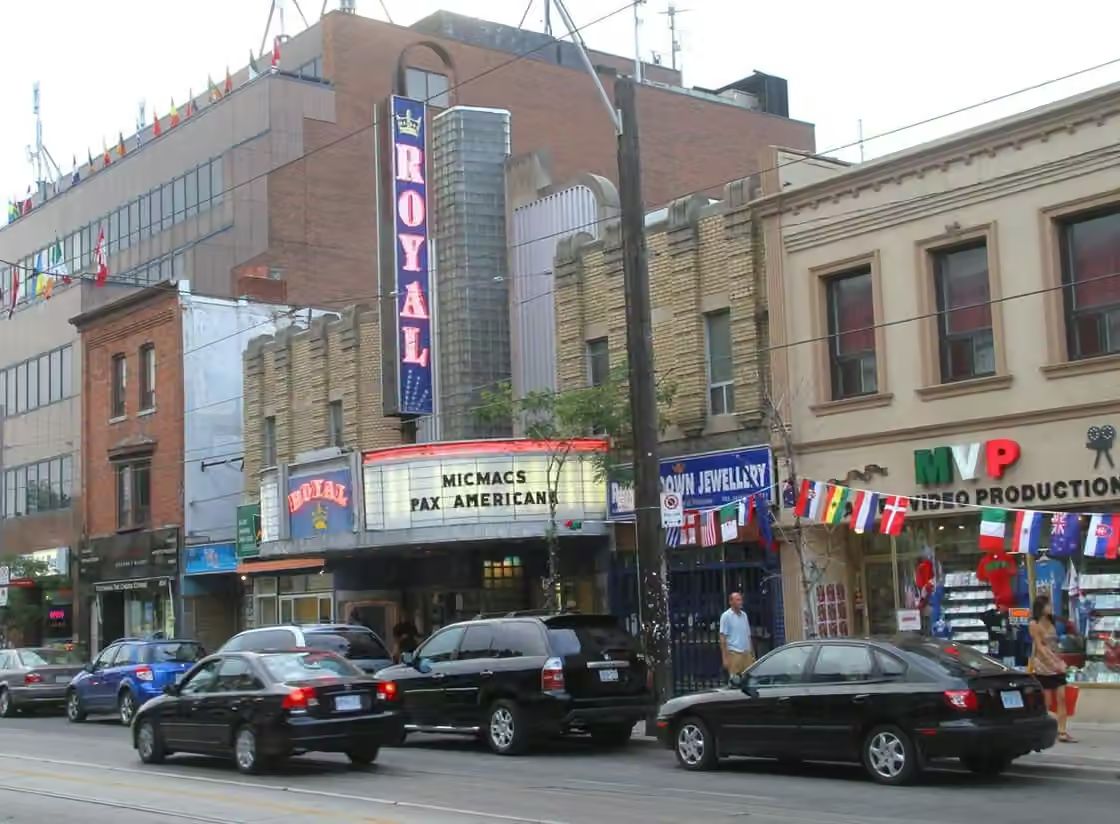 West Toronto
Little Italy
A broad restaurant street with patios and evening activity, surrounded by quieter residential blocks. It suits dinner followed by a short walk, with enough variety to avoid committing the whole night to one venue.
 West Toronto
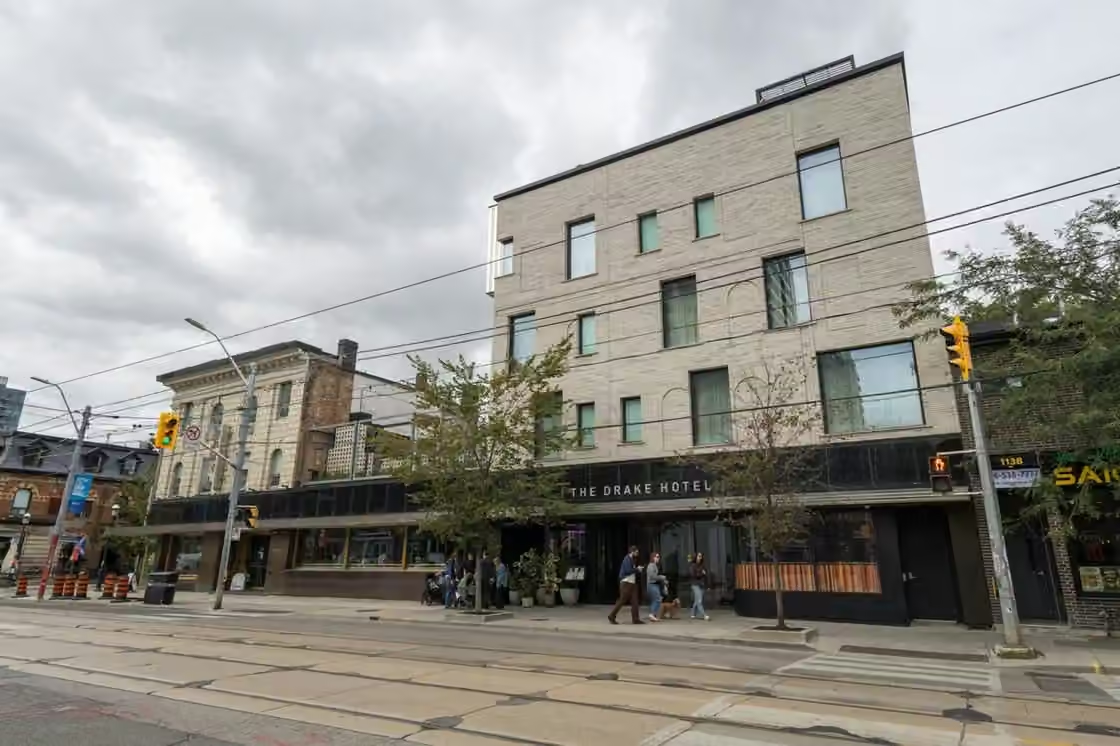
West Queen West
A long, varied stretch for browsing and going out, with the park providing a pause between commercial blocks. It works best when you choose a smaller cluster rather than trying to cover the whole street in one evening.
 West Toronto
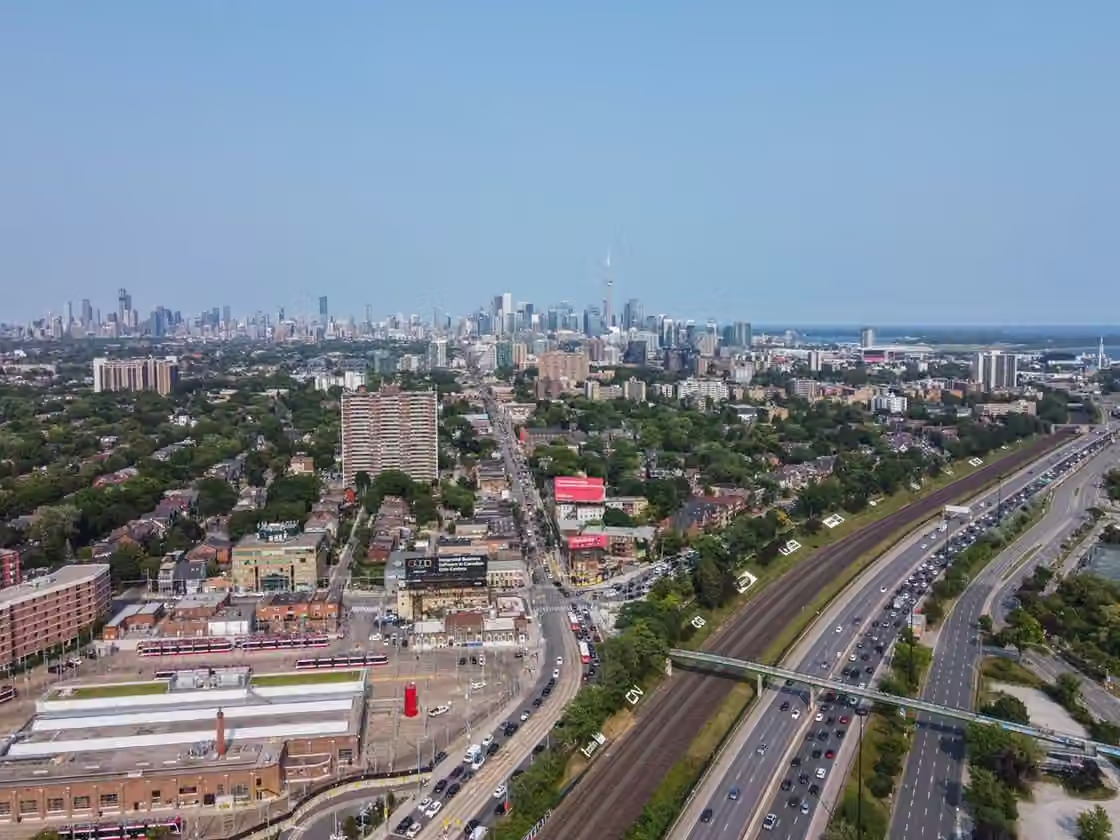
Parkdale
Queen Street mixes everyday services with restaurants and bars, while nearby blocks reveal very different scales of housing. Its social and cultural life is broader than the part encountered on an evening out.