
Riverside
A compact stretch for dinner and a show, with the Opera House giving the evening a clear centre. Queen Street stays busy while the residential streets behind it are much quieter.
Spending time here
For a date, the district works especially well when a performance supplies the main event. Choose a table close enough to leave a realistic walk to the venue, then use the remaining time to look at the bridge or the corner architecture. The Broadview’s rooftop offers a different perspective on the Don and downtown, while smaller rooms along Queen suit a closer conversation. Riverside also contains longstanding community services and everyday businesses; its history is more extensive than the places a visitor might book for a night out.
The railway near De Grassi supplies another visible edge. Looking back towards the Don from this part of Queen makes the compactness of the commercial district apparent. Its usefulness for a short evening comes from that concentration, although a restaurant’s actual opening hours and reservation policy still matter more than proximity alone.
Across the Don
Crossing the Queen Street bridge is a useful way to understand Riverside. The river once separated the growing city from an eastern landscape of industry and market gardens. The crossing had practical importance long before the neighbourhood acquired its current reputation for restaurants. A wooden bridge occupied this route in the early nineteenth century; the steel truss structure dates to 1911. Its raised approaches changed the levels of Queen Street on both sides of the river.
The bridge now doubles as a public artwork. Eldon Garnet’s words above the crossing, installed as part of the 1996 Time and a Clock project, turn an everyday passage into a reflection on change. A later lighting project, completed in 2015, made the structure more visible after dark. The art is a particularly apt introduction to a district whose identity has been repeatedly revised.
A main street of changing uses
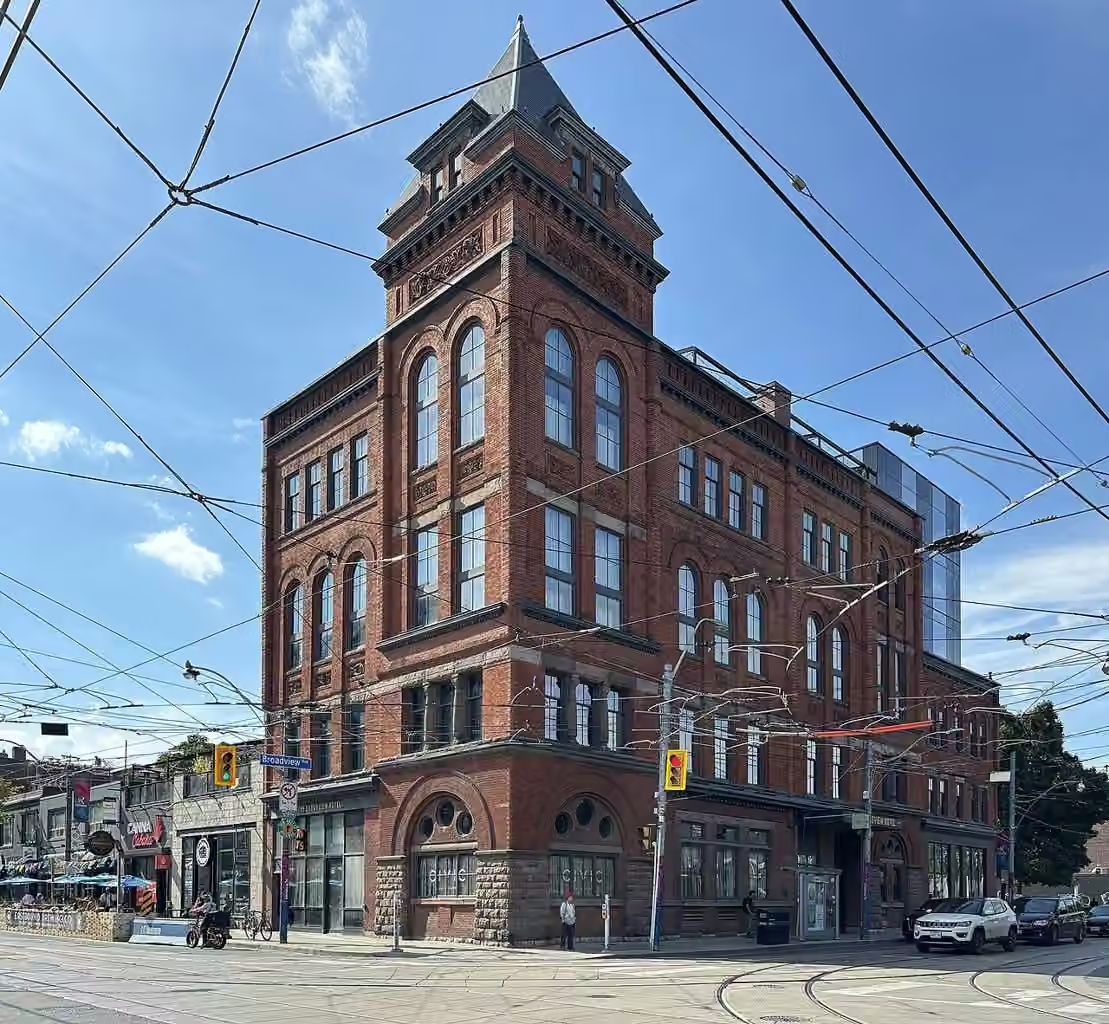
At Queen and Broadview, Dingman’s Hall opened in 1891 near a tollgate that served the road east. The building subsequently accommodated hotel and rooming-house uses before becoming known for Jilly’s. Its conversion into the present Broadview Hotel retained the conspicuous corner building while changing its role in the local economy. The transition is one of the clearest physical markers of Riverside’s move towards destination dining and hospitality.
Other buildings show a longer continuity of public entertainment. The Opera House at 735 Queen Street East began as the La Plaza Theatre, moved through cinema use and became a concert venue. Its changing programme has kept the large auditorium useful as the surrounding street changed. Nearby storefronts and older commercial buildings make the district feel like a main street that has accumulated uses over time.
The Riverside name
The commercial district’s name has its own history. The local business association was once Queen-Broadview Village and formally adopted Riverside in 2004, reviving an older place-name. The present identity follows Queen East from the Don towards De Grassi Street. Treat those edges as an introduction to the area rather than a precise boundary for everyone who lives nearby.
Sources & further reading
Researched from the sources below. The description of the neighbourhood’s character is SceneTO’s editorial interpretation.
Riverside BIA: neighbourhood history and landmarks ↗Riverside BIA: the gateway bridge ↗The Broadview Hotel ↗Keep exploring
All neighbourhoods ↗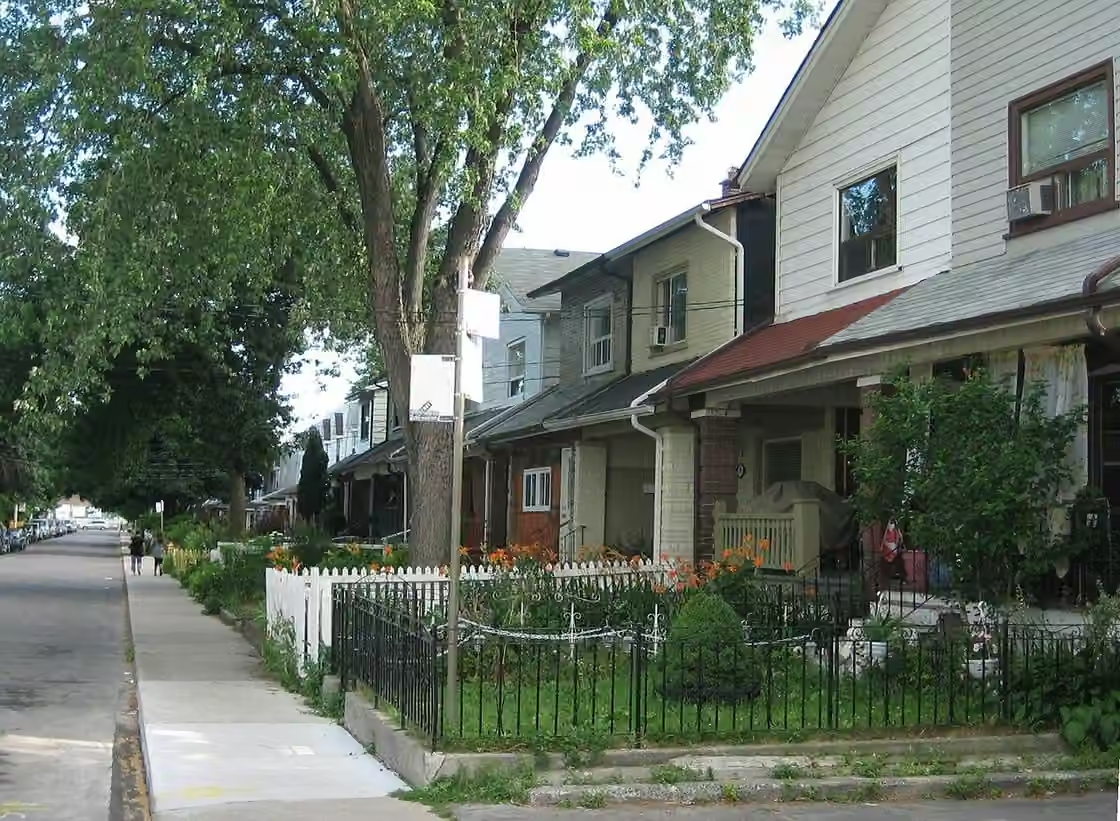 East Toronto
Leslieville
Queen East is suited to a slow afternoon that can extend into dinner. The residential streets and former industrial blocks give it more variation than a single restaurant strip suggests.
 East Toronto
The Danforth
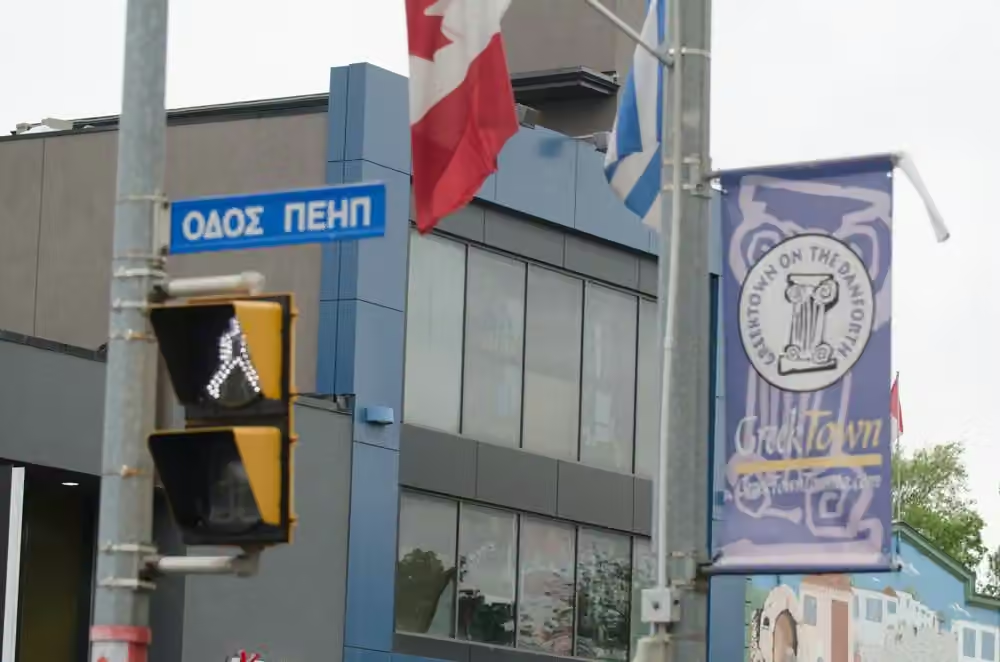
A good district for an unhurried meal before live music. The long avenue changes as you move east, so choose a particular stretch instead of treating the whole Danforth as one destination.