
The Danforth
A good district for an unhurried meal before live music. The long avenue changes as you move east, so choose a particular stretch instead of treating the whole Danforth as one destination.
Spending time here
Today the Greek restaurants sit within a wider food and shopping district. Destination Toronto’s guide points to Ethiopian, Turkish, Persian and Lebanese places as part of the avenue’s present character. For a first visit, decide whether the Music Hall and Broadview end or the Greektown stretch around Chester and Pape is your centre of gravity. A comfortable dinner-and-show plan depends on that choice: the Danforth is a long road, and an address described as “on the Danforth” may be well beyond the section you meant.
Carrot Common adds a different kind of gathering space to the avenue: a courtyard set back from the traffic. It is a useful reminder that the Danforth’s social life happens in smaller passages and shared spaces as well as along the long, highly visible line of storefronts.
A road becomes a city street
The Danforth began as a comparatively remote route beyond the Don Valley. The Don and Danforth Plank Road Company built the avenue in 1851, connecting it with Broadview. The road passed through an area of gardens and scattered development. Its transformation depended on the ability to get people across the valley and along the avenue cheaply and reliably.
Streetcar improvements arrived in the early twentieth century, followed by the completion of the Don section of the Prince Edward Viaduct in 1918. The City’s historic context study connects these transport changes with a surge of building. Much of the surviving commercial streetscape dates from the first decades of the twentieth century. Shops with homes above them gave the avenue a continuous edge, serving the residential streets growing on both sides.
How Greektown took shape
The avenue’s Greek identity emerged through several generations of migration rather than a single founding moment. Earlier residents included people of British and Irish backgrounds, while Italian businesses helped establish the street’s food trade. Greek arrivals before and after the Second World War expanded a community whose history also includes displacement and political upheaval in Greece. Churches, associations and meeting places helped sustain relationships beyond the shop counter.
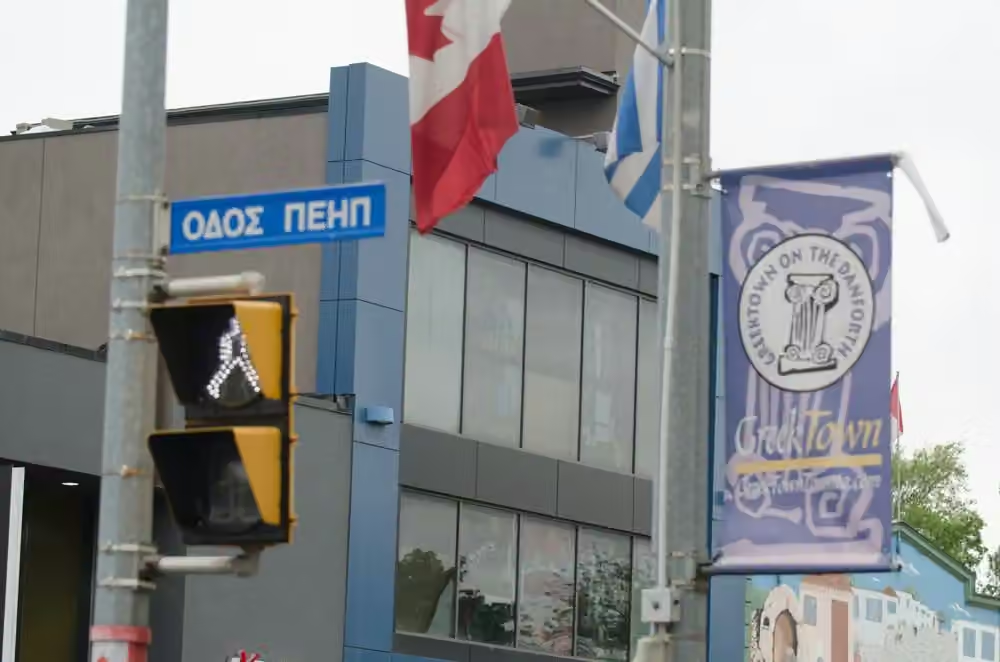
By the 1970s the Danforth had become a recognised centre of Greek Toronto. Bilingual street signs made that identity visible during the following decade. The name Greektown remains meaningful even as the local mix of businesses and residents changes. The historical walking programme developed by the Hellenic Heritage Foundation places this story alongside infrastructure, political history and community organising. That is a fuller account than reducing the district to a row of restaurants.
Entertainment and the subway
Entertainment is another part of the avenue’s continuity. The Danforth Music Hall began as a cinema and became an important live venue; other halls and taverns also gave the street a musical life. The subway’s opening in 1966 made the district easier to reach from across Toronto. Those connections still help explain why a visitor can combine a neighbourhood meal with a concert without making a car the centre of the evening.
Sources & further reading
Researched from the sources below. The description of the neighbourhood’s character is SceneTO’s editorial interpretation.
City of Toronto: Danforth historic context statement ↗Danforth BIA: history of the avenue ↗Heritage Toronto: The Danforth historical walk ↗Destination Toronto: Danforth Greektown ↗Keep exploring
All neighbourhoods ↗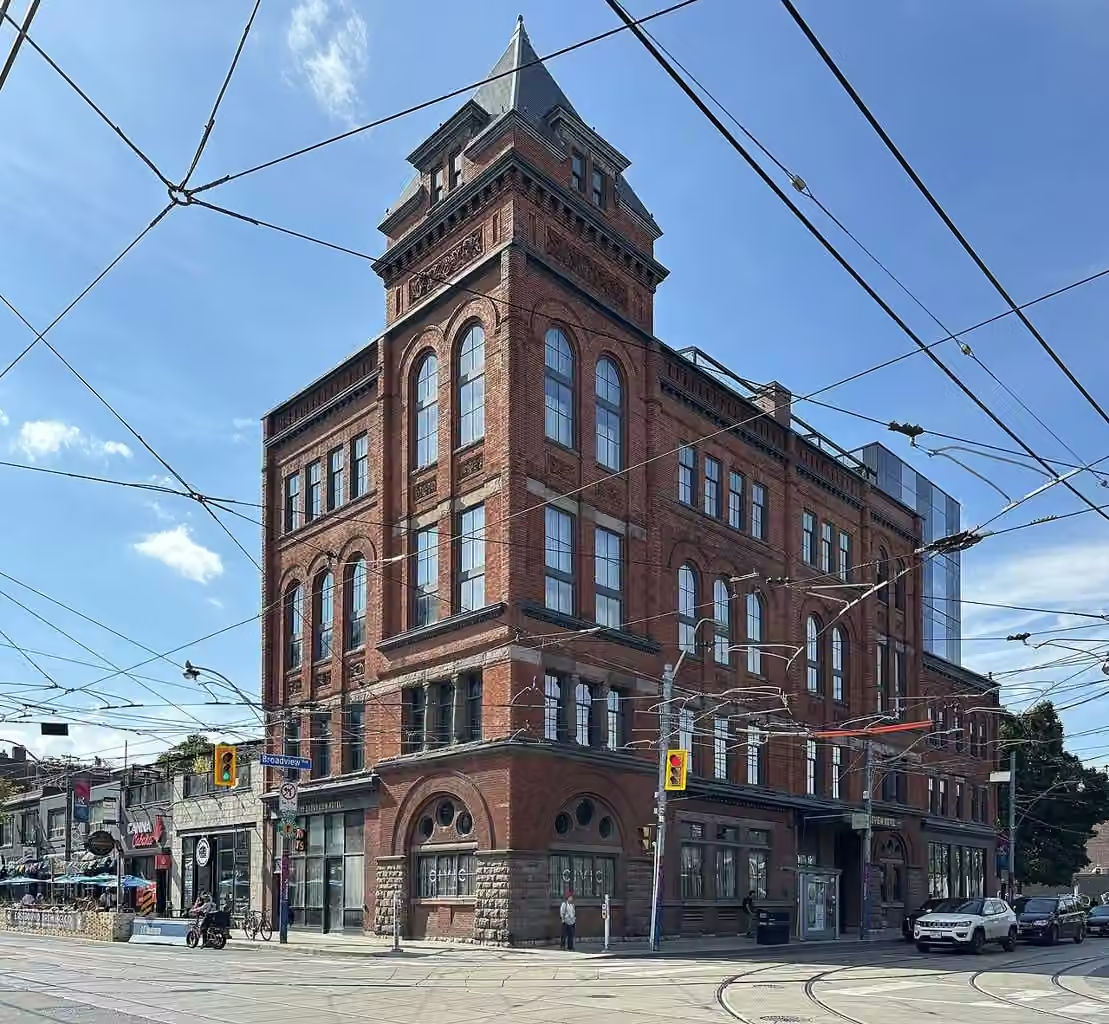 East Toronto
Riverside
A compact stretch for dinner and a show, with the Opera House giving the evening a clear centre. Queen Street stays busy while the residential streets behind it are much quieter.
 East Toronto
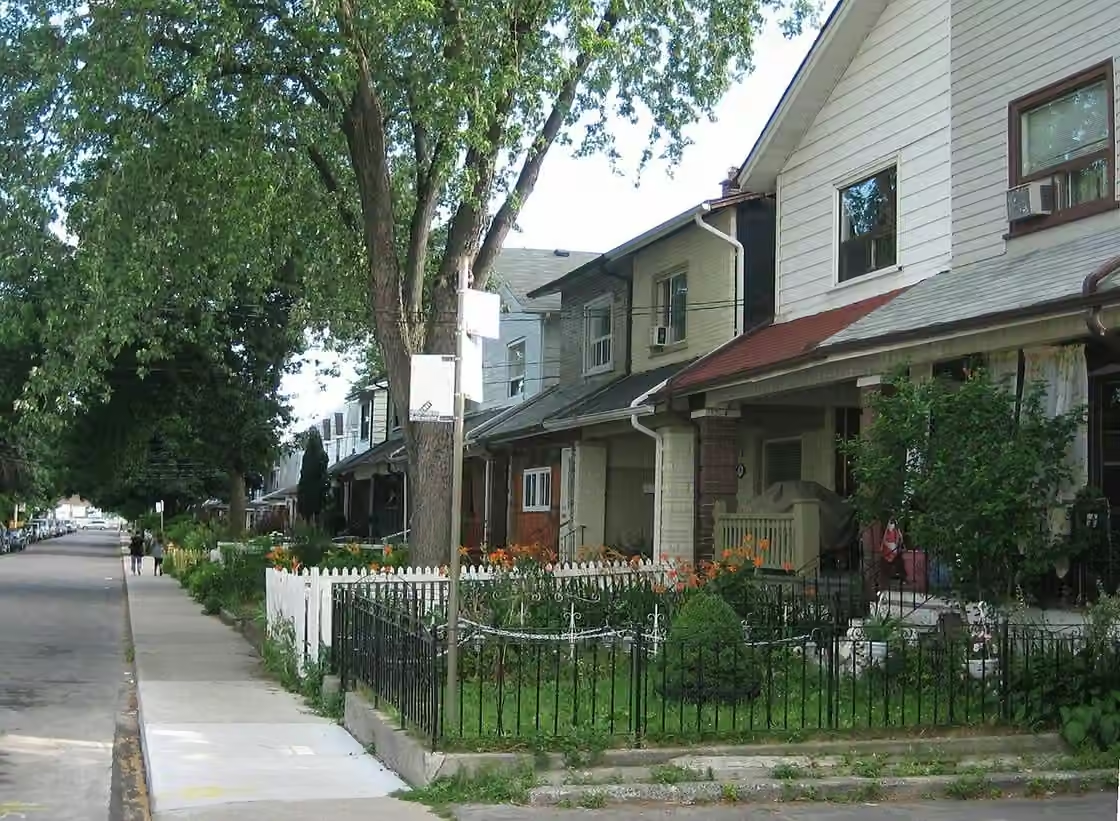
Leslieville
Queen East is suited to a slow afternoon that can extend into dinner. The residential streets and former industrial blocks give it more variation than a single restaurant strip suggests.