
Junction Triangle
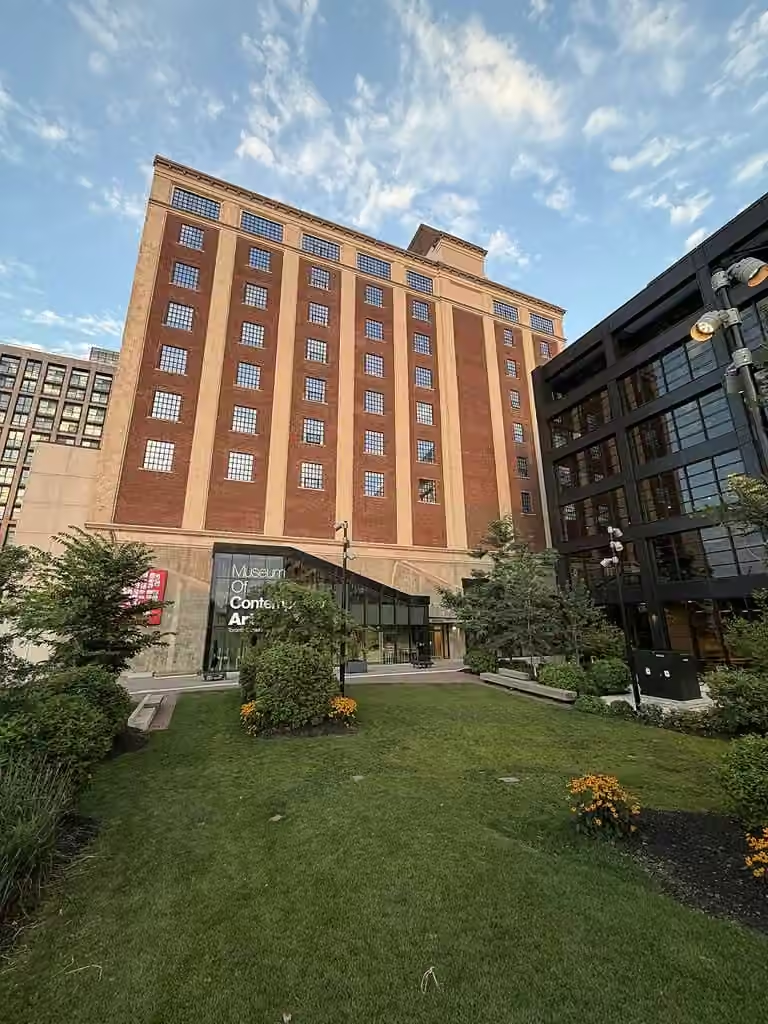
A good choice when an exhibition supplies the anchor for the day. Sterling Road’s larger industrial spaces feel different from the compact residential streets closer to Dupont.
Spending time here
For a visit, begin with a specific exhibition or event and walk the surrounding streets with that tension in mind. The West Toronto Railpath, first opened in 2009, offers another way to understand the rail corridor’s evolving public use; check current access before making it part of a route. Sterling Road and the residential streets around Perth feel quite different, and both belong to the district. Allow time for actual crossings when pairing an exhibition with dinner elsewhere in the west end.
The change in scale is part of the experience. A large factory elevation can give way to a narrow residential street within a short walk. Those transitions make the neighbourhood interesting to explore, but they also reflect the close relationship between industrial employment and the households that once depended on it.
A neighbourhood made by rail
The triangle in the name is physical. Railway routes enclosed a pocket of Toronto’s west end, making it useful for industry while shaping how residents could move through it. Heritage Toronto dates the first railway track in the area to 1853 and the establishment of the surrounding triangle to 1883. The resulting geography still matters: a crossing or underpass can determine the useful route more than a straight line on a map.
Factories and workshops attracted people seeking employment. Newcomers from several parts of Europe made homes near the industrial sites, and the district acquired the schools, churches and organisations needed to sustain a community. The railway story therefore belongs to everyday residential life as well as engineering. Looking only at the large buildings misses the houses and local institutions that made an industrial neighbourhood possible.
Community beyond the factory gate
Ukrainian settlement left a particularly visible institutional history. St. Josaphat’s parish took shape in the early twentieth century, providing a place for religious and community life. After the earlier church burned in 1964, a new building opened in 1965. Its presence on Franklin Avenue shows how an immigrant community invested in permanence close to the places where its members worked.
Sport was another means of making local connections. Perth Avenue’s playground hosted baseball, while later Portuguese community organisations helped sustain football and other activities. These institutions complicate the familiar account of an industrial district suddenly being “discovered” by artists. Cultural life existed here before the factories became studios; it took forms closely connected with families, language, religion and shared recreation.
Art, conversion and changing costs
As industry declined, some former workplaces became studios and other creative spaces. Sterling Road became a prominent example of this transition. MOCA opened in the former Tower Automotive building in 2018, placing a public contemporary-art institution inside a large industrial structure. The conversion kept the scale and material presence of the old workplace visible while changing the audience that came through its doors.
Heritage Toronto also records the pressure that redevelopment and rising rents placed on artists and other residents. The area’s cultural reputation and its affordability do not necessarily move together.
Sources & further reading
Researched from the sources below. The description of the neighbourhood’s character is SceneTO’s editorial interpretation.
Heritage Toronto: railways and the Railpath ↗Heritage Toronto: community development ↗Heritage Toronto: art and development ↗Keep exploring
All neighbourhoods ↗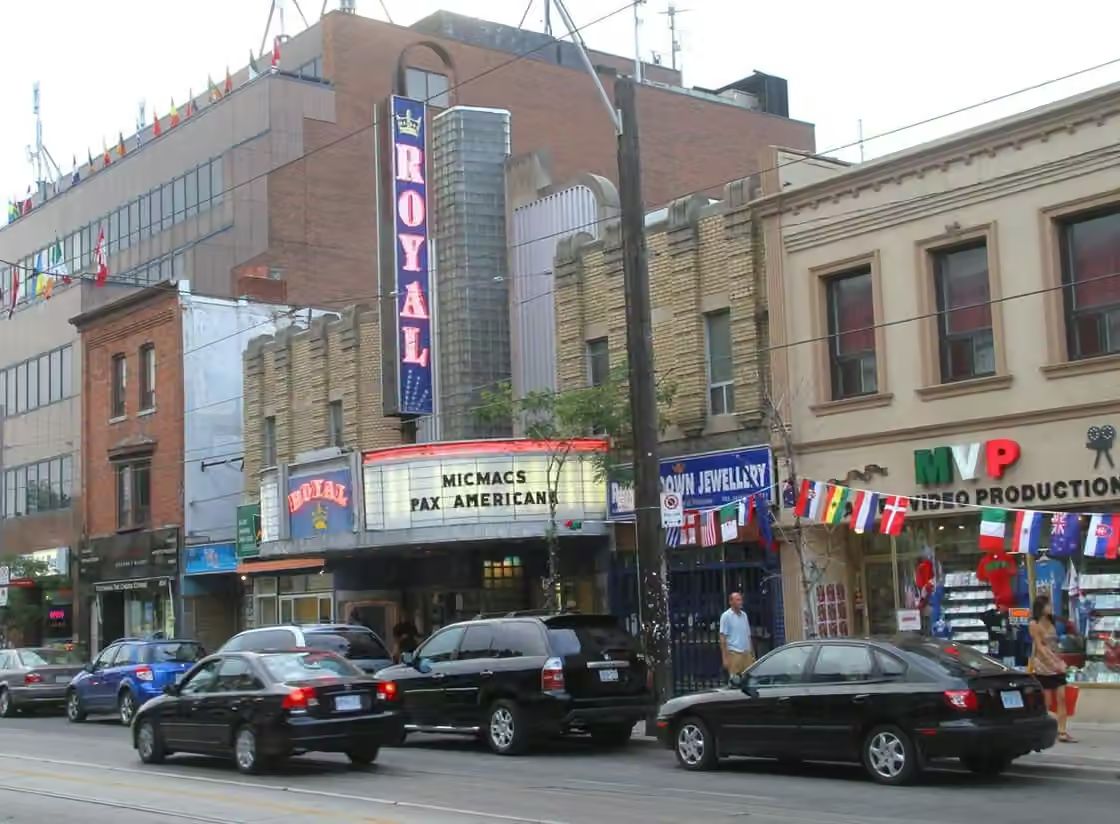 West Toronto
Little Italy
A broad restaurant street with patios and evening activity, surrounded by quieter residential blocks. It suits dinner followed by a short walk, with enough variety to avoid committing the whole night to one venue.
 West Toronto
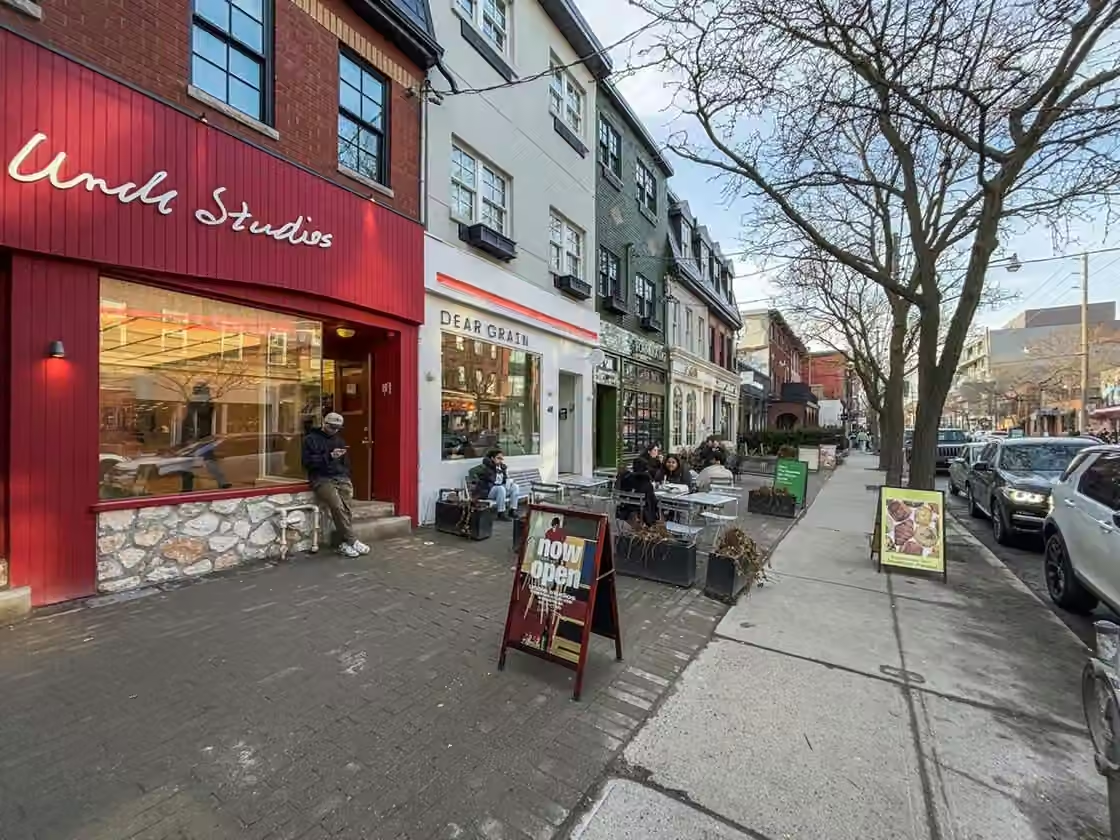
Ossington
Concentrated and sociable, especially in the evening, with restaurants close enough to combine with a drink and a walk. The residential streets immediately alongside it have a much quieter rhythm.
 West Toronto
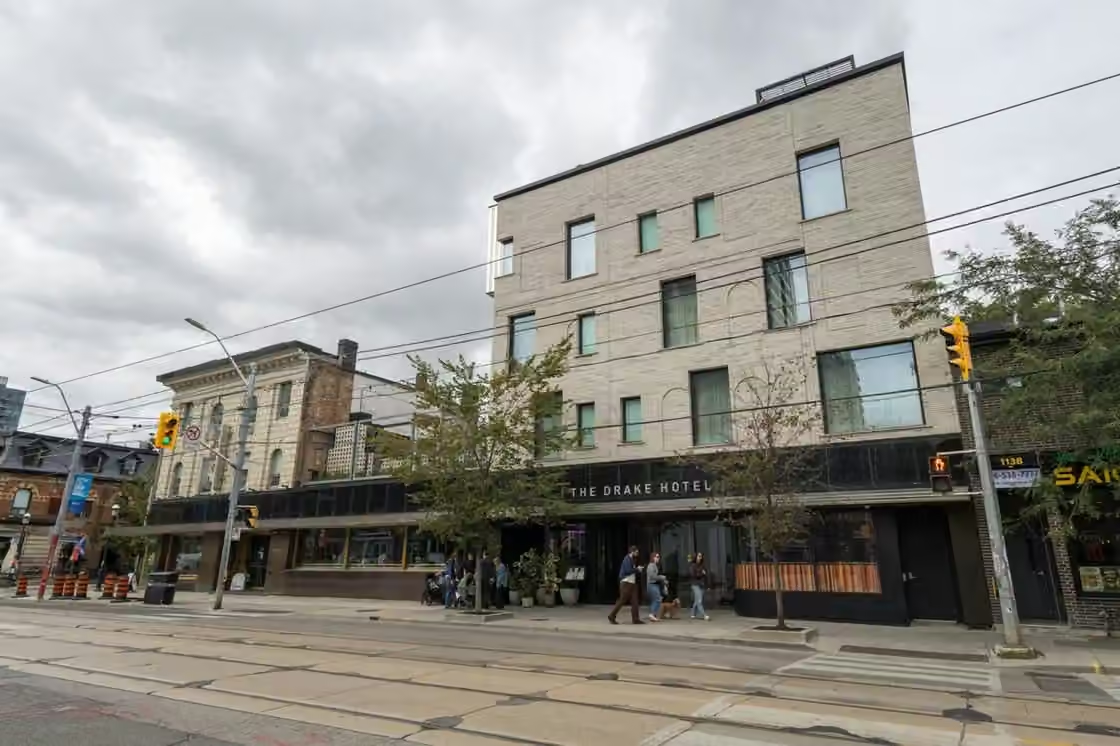
West Queen West
A long, varied stretch for browsing and going out, with the park providing a pause between commercial blocks. It works best when you choose a smaller cluster rather than trying to cover the whole street in one evening.